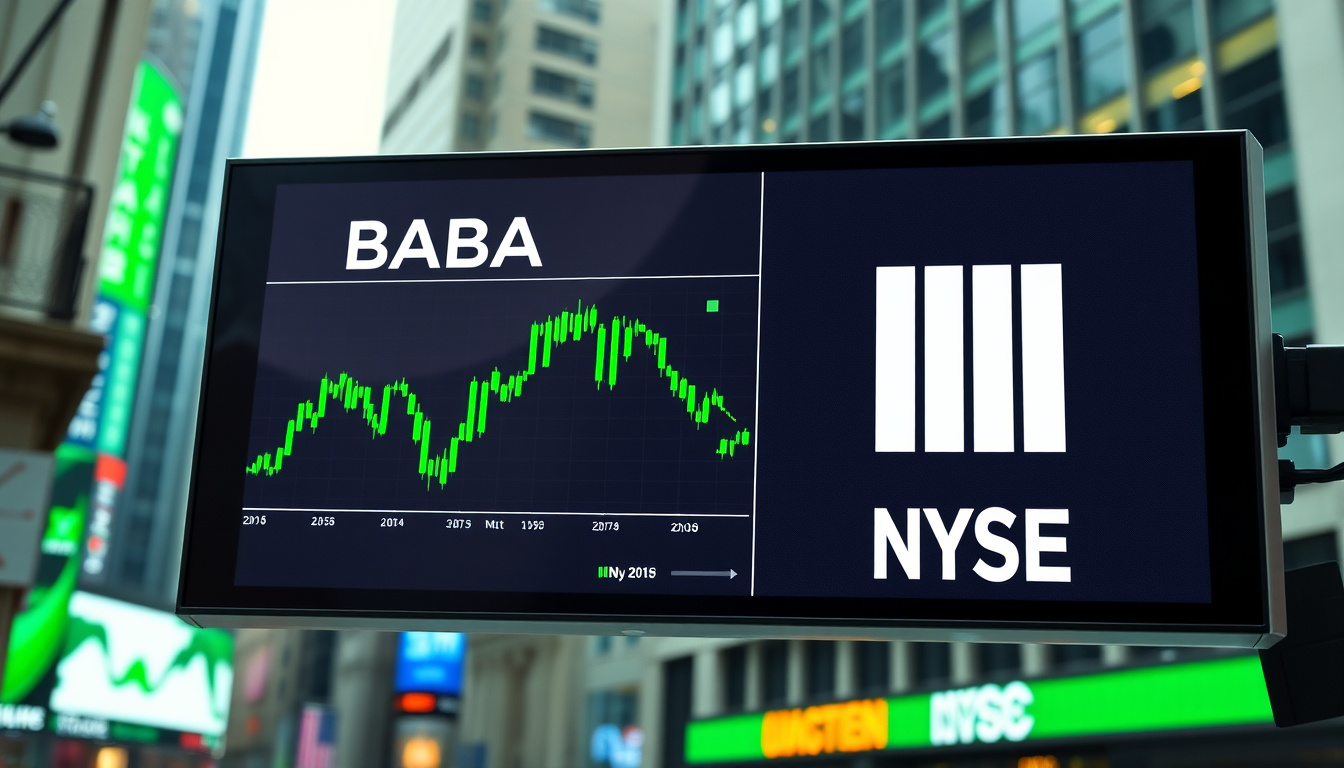
Charlie Munger called Alibaba his worst mistake yet held a $72 million stake. Michael Burry has maintained exposure to BABA alongside him. Both contrarians have been vindicated as the stock trades at $159.15, leaving analysts projecting meaningful upside from current levels.
Current Price: $159.15 · Day High: $162.00 · 52 Week High: $192.67 · Prev Close: $158.04 · Analyst Target Upside: 9% below target
Quick snapshot
- BABA 52-week range spans $80.06–$192.67 (Robinhood)
- Analyst consensus target sits at $174.35 (eToro)
- BABA surged +74% after Munger’s November 2023 death (Business Insider)
- Precise current holdings for Michael Burry in 13F filings
- Exact restart date for BABA buyback program
- Latest Daily Journal 13F disclosures post-April 2022
- Q1 2021: Munger bought first 165,000 BABA ADS (Business Insider)
- End 2021: Position grew to 602,000 shares worth $72M (Business Insider)
- Feb 2023: Munger called Alibaba “one of the worst mistakes” (Business Insider)
Alibaba trades on the NYSE under the symbol BABA, with key metrics anchored by verified market data.
| Metric | Value |
|---|---|
| Stock Symbol | BABA (NYSE) |
| Latest Price | $159.15 |
| 52 Week High | $192.67 |
| 52 Week Low | $80.06 |
| 52 Week High Date | 10/02/25 |
| Analyst Consensus Target | $174.35 |
Is BABA a buy right now?
Current price trends
BABA opened at $133.68 on the most recent session, reaching an intraday high of $136.20 before settling near $159.15. Trading volume came in at 7.95 million shares against a 30-day average of 14.71 million, suggesting the stock hasn’t attracted heavy speculative flow yet. The shares sit roughly 17% below the 52-week high of $192.67, leaving substantial ground to recover if sentiment shifts.
The stock has rallied more than 80% at various points during the China tech rally, respecting key technical structure on the charts (TradingView). However, the latest session shows modest gains, with the price hovering in a relatively tight range between $133 and $136.
Analyst targets
The analyst consensus price target stands at $174.35 according to eToro, implying roughly 10% upside from current levels. Freedom Broker recently upgraded the stock to Buy with a $190 target, up from a prior $180 estimate — one of the more bullish Wall Street voices on the name. The gap between where BABA trades today and where analysts expect it to be provides a quantitative framework for the valuation debate.
For investors watching from the sidelines, the analyst consensus target of $174.35 creates a measurable benchmark: if the stock approaches that level, the upside case narrows considerably. Freedom Broker’s $190 target represents the more aggressive bull scenario.
Upsides
- Trades roughly 10% below analyst consensus target of $174.35
- Buybacks resumed at $140/share ceiling signal management conviction
- Alibaba committing $52B to AI capex over three years, hiring 3,000 AI interns
- BABA surged +56% year-to-date alongside China tech rally
- PE of approximately 21 considered cheap by value-oriented investors
Downsides
- Stock still more than 17% below 52-week high of $192.67
- Regulatory uncertainty in China continues to cloud long-term outlook
- Charlie Munger called Alibaba “one of the worst mistakes I ever made”
- Daily Journal halved its stake in April 2022, reducing exposure
- Current price sits below Munger’s original purchase range for many holders
Why is Michael Burry investing in Alibaba?
Burry’s recent buys
Michael Burry, the Scion Asset Management manager famous for calling the 2008 housing crisis, has maintained an association with BABA as a portfolio holding. While precise current 13F disclosures for his latest positioning aren’t publicly verified at the time of writing, Burry’s prior disclosures and public statements have aligned him with contrarian bets on Chinese technology names. His involvement signals that the valuation argument has attracted investors willing to look past near-term noise.
Reasons for investment
The bull case for Burry centers on the same factors driving other guru investors: a dominant market position in Chinese e-commerce and cloud computing, trading at a steep discount to comparable U.S. peers, combined with aggressive buyback programs that signal management’s own belief in undervaluation. When senior executives authorize repurchases at a $140 ceiling, they’re essentially putting a floor under the stock through their own capital allocation decisions.
“I regard Alibaba as one of the worst mistakes I ever made.”
— Charlie Munger, Daily Journal Annual Meeting, April 2022 (Business Insider)
Munger’s self-described mistake didn’t prevent him from holding the position. Daily Journal built that stake to 602,000 shares worth $72 million by end of 2021, representing 28% of its entire U.S. portfolio — a conviction that outlasted his public criticism.
Is BABA undervalued?
Valuation metrics
By several conventional measures, BABA looks inexpensive. The P/E ratio sits around 18–21 depending on the data source, well below the multiples commanded by Amazon, Microsoft, or other cloud-centric peers. Add in a dividend yield that catches attention, and the quantitative case for undervaluation gains support. Alibaba’s restarted buyback program — with a $140-per-share ceiling — represents the most direct signal from management that the current price doesn’t reflect intrinsic value.
The 52-week range of $80.06 to $192.67 tells a volatile story: BABA hit its low during a period of maximum regulatory uncertainty in China, then recovered sharply as conditions stabilized. The distance from today’s $159 to the 52-week high of $192.67 represents the ceiling that bulls believe is achievable if execution holds.
Recent price analysis
Shares are now at their highest since November 2021, but that represents less than half of the October 2020 peak — a reminder of how dramatically the stock has pulled back from its former glory. The recovery to current levels reflects renewed optimism around China’s tech sector, Alibaba’s AI investments, and the valuation gap that contrarian investors like Burry and Munger identified.
“I’ve been saying forever that China had better companies than over here does and this got cheap enough, and I talked to Li Lu.”
— Munger, as reported by Acquirers Multiple
Is Warren Buffett invested in Alibaba?
Buffett’s holdings
Warren Buffett has not directly owned Alibaba stock through Berkshire Hathaway. However, the connection to Charlie Munger — his long-time business partner and vice chairman — creates a tangential relationship that investors should understand. Munger managed the Daily Journal, and his Alibaba stake effectively represented his personal investment thesis separate from Berkshire’s formal portfolio.
Related investments
The Buffett-Munger angle often gets conflated with direct Berkshire ownership of BABA, which does not exist. What does exist is the intellectual framework both investors share: patient capital, long time horizons, and a willingness to buy businesses trading far below intrinsic value. Munger applied that framework to Alibaba, and the fact that his position was large enough to constitute 28% of Daily Journal’s U.S. portfolio tells you something about the conviction level.
Should I buy, sell, or hold BABA stock?
Pros and cons
The decision framework for BABA breaks along several dimensions. On the bull side: analyst targets ranging from $174 to $190 imply meaningful upside, management’s buyback activity signals conviction, and the AI investment story ($52B over three years) positions the company for long-term growth. On the bear side: Munger’s self-described “mistake,” the stake reduction by Daily Journal, ongoing regulatory risk in China, and the simple reality that the stock has been a painful trade for long-term holders.
For current holders, the question is whether to add on weakness or trim into strength. For new investors, the entry point matters enormously given the volatility history. Freedom Broker’s upgrade to Buy with a $190 target provides a reference point — one that suggests the stock has room to run if AI monetization and cloud growth continue.
Forecast outlook
StockInvest.us publishes a forecast that incorporates technicals and valuation models, generally pointing toward modest upside from current levels. The Chinese tech rally that has powered BABA +56% year-to-date remains a factor, though the sustainability of that rally depends on macro conditions in China and regulatory clarity that hasn’t fully materialized.
For investors making a decision: monitor whether BABA can reclaim the $140 level consistently, which would signal the buyback program can operate effectively. Failure to hold that level could indicate the market is pricing in further regulatory risk or competitive pressure.
Related reading: BABA Share Price: Burry Profits, Munger Mistake · ASX: PLS – Share Price, Performance and Lithium Outlook
Frequently asked questions
What is the current BABA share price?
The most recent verified price showed BABA trading around $159.15, with the session high reaching $162.00. Google Finance recorded an open of $133.68 and market cap of approximately $189.97 billion. Prices fluctuate throughout the trading session.
What is Alibaba stock price prediction tomorrow?
Short-term price predictions depend on overnight news, macro conditions, and sector sentiment. Analyst consensus targets from eToro place the 12-month price at $174.35, while Freedom Broker’s upgrade targets $190. No reliable model predicts daily movement.
Where does BABA trade?
BABA trades on the New York Stock Exchange (NYSE) under the ticker symbol BABA. It also trades over-the-counter in Hong Kong under different listing structures for investors in Asia.
What is the latest BABA news?
Recent coverage centers on analyst upgrades, the ongoing China tech rally, and investor guru commentary. Charlie Munger’s Alibaba position has drawn renewed attention following his 2023 passing, with BABA up significantly since then.
How has BABA performed this year?
BABA is up approximately 56% year-to-date, driven by a broader China tech rally and renewed investor interest in the valuation argument. The stock gained 74% in the period following Munger’s November 2023 death.
What are analyst ratings for BABA?
Analyst consensus price target stands at $174.35 according to market data aggregators. Freedom Broker recently upgraded the stock to Buy with a $190 target, suggesting meaningful upside from current levels.
The stock remains a polarizing name: Munger called it his worst mistake while holding a massive position, analysts see roughly 10% upside, and the valuation metrics argue for cheapness that value investors find attractive. The regulatory environment in China keeps the bear case alive, but the magnitude of potential upside has drawn the interest of some of Wall Street’s most celebrated contrarians.
For investors willing to accept China exposure, BABA presents a concrete valuation gap between current price and analyst targets. Whether that gap closes through business execution, market re-rating, or simply more buybacks remains to be seen — but the entrance of guru capital and management’s own buyback activity suggest the bulls believe the market is underestimating Alibaba’s worth.

Ethan Morrison is Senior Reporter at Aussie Wire Hub, covering breaking stories and explainers.