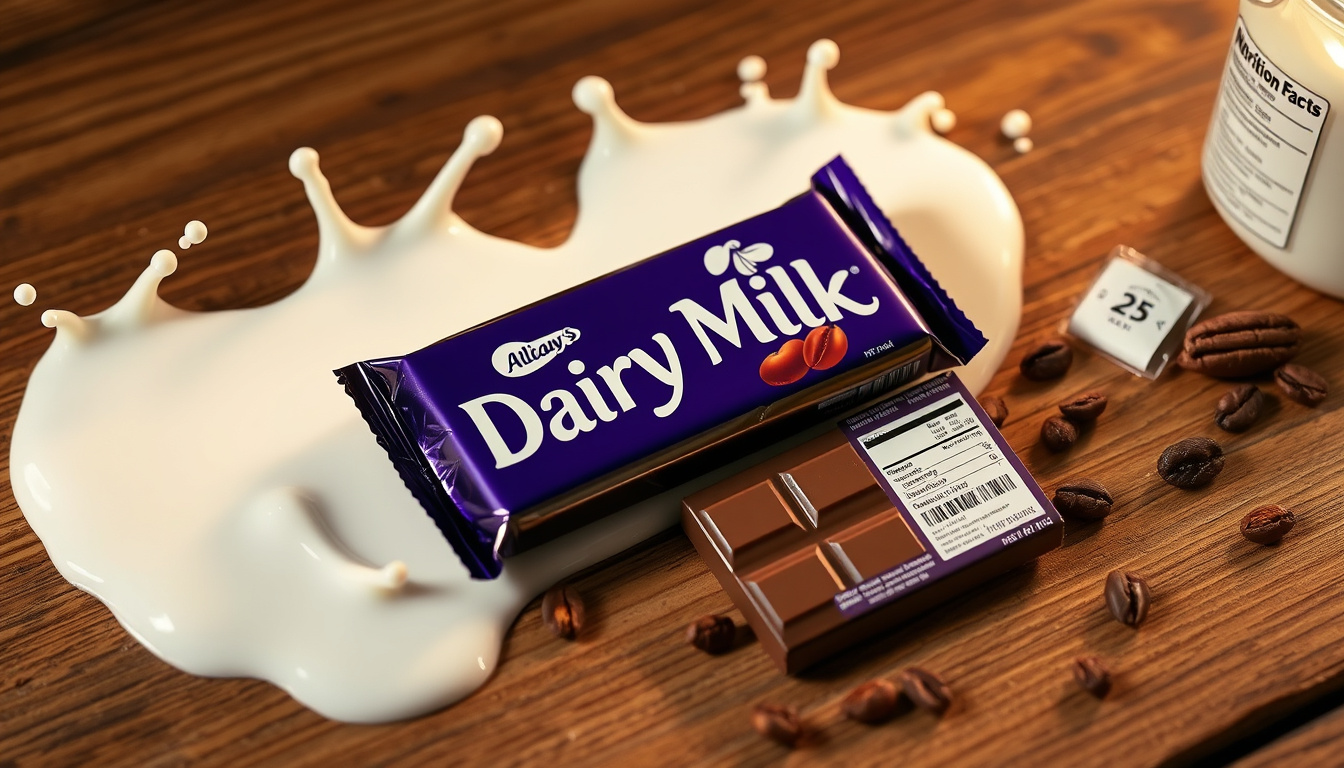
Few chocolate bars carry the weight of Cadbury Dairy Milk. First launched in 1905, the “glass and a half” bar has sat in confectionery cases for over a century—but recent years brought it under scrutiny over palm oil use in global markets. This piece cuts through the marketing to separate what is actually in Dairy Milk, what concerns are legitimate, and what falls into myth.
Milk Solids: 20% minimum (actual 23%) · Cocoa Solids: 20% minimum · Equivalent Milk: 426 ml fresh liquid milk per 227 g · Launched: 1905 · Manufacturer: Cadbury
Quick snapshot
- Cadbury owns Dairy Milk since 1905 (Bakers Journal)
- Meets UK chocolate standards for milk and cocoa content (Ethical Consumer)
- NZ removed palm oil within a few weeks of August 2009 announcement (Mongabay)
- Whether current global Dairy Milk contains palm oil in any market
- Exact palm oil percentage in any regional recipe if present
- Whether it ranks as the world’s number one chocolate by sales
- 2009: NZ palm oil addition and removal cycle (Ethical Consumer)
- 2025: West Papua boycott call against Mondelez/Cadbury (Ethical Consumer)
- Mondelez faces ongoing pressure over palm oil sourcing ethics
- Consumers in markets with strong labeling rules may see more transparency
The table below outlines Cadbury Dairy Milk specifications and current status regarding palm oil.
| Specification | Detail |
|---|---|
| Manufacturer | Cadbury (owned by Mondelez International since 2010) |
| Launch Year | 1905 |
| Milk Content | Glass and a half of fresh milk (23% milk solids minimum) |
| Cocoa Solids | 20% minimum |
| Fresh Milk Equivalent | 426 ml per 227 g bar |
| Bar Sizes Available | 53 g (single serving), 180 g (sharing bar) |
| Palm Oil Status (NZ) | Removed August 2009 following consumer pressure |
| Palm Oil Status (Global) | Parent Mondelez scores 0/100 on Ethical Consumer rating |
“At the time, we genuinely believed we were making the right decision, for the right reasons.”
— Matthew Oldham, Cadbury New Zealand Managing Director (Mongabay)
“Kiwi consumers have told us they don’t want palm oil in their Cadbury Dairy Milk, so it’s going.”
— Cadbury statement (Trellis)
Is Dairy Milk no longer chocolate?
By legal standards in the UK, yes—Dairy Milk qualifies as real chocolate. Regulations require a minimum of 20% cocoa solids and 20% milk solids, and Dairy Milk meets both thresholds at 23% milk solids and 20% cocoa solids. The product uses cocoa mass rather than cocoa butter substitutes, which aligns with the EU’s chocolate definition.
Legal chocolate definition
UK food law specifies that “chocolate” must contain cocoa solids from cocoa nib, cocoa mass, cocoa press cake, or cocoa dust. Dairy Milk uses cocoa mass as its primary cocoa ingredient, which satisfies this requirement. The addition of milk solids—specifically at 23%—distinguishes it as milk chocolate rather than dark or white variants.
One caveat applies: where fillings are present in Dairy Milk variants, manufacturers may use vegetable fats including palm oil to achieve smooth consistency and extended shelf life. Ethical Consumer notes that palm oil derivatives appear in ingredient lists under prefixes such as laur-, stear-, glyc-, and palm-.
Ingredient breakdown
The core Dairy Milk bar (without variants) contains milk, sugar, cocoa butter, cocoa mass, vegetable fats in fillings, whey, milk fat, emulsifiers, and flavours. UK rules prevent listing palm oil generically as “vegetable oil”—consumers can identify it as “palm oil” on labels in that market. In other regions, labeling practices differ.
The implication: regional recipe variations mean consumers cannot assume identical formulations across markets without checking local ingredient labels.
Is Dairy Milk and Cadbury the same thing?
Dairy Milk is Cadbury’s flagship milk chocolate brand, manufactured by the British confectionery company Cadbury. Cadbury itself became part of Mondelez International in 2010 when Kraft Foods acquired the company in a deal valued at approximately $19.5 billion.
Brand ownership
Cadbury traces its roots to 1824 when John Cadbury opened a tea and coffee shop in Birmingham, England. The Dairy Milk brand launched in 1905 and became the company’s best-selling product line. Today, Cadbury operates as a subsidiary of Mondelez, with manufacturing facilities across multiple countries including the UK, Ireland, India, Australia, New Zealand, and South Africa.
Product line details
The Dairy Milk line includes the classic glass-and-a-half bar in various sizes, the Dairy Milk Fruit Nut, Dairy Milk Caramel, and limited-edition flavours. Import variants like Dairy Milk Pistachio Crunch appear in some markets but may carry different recipes reflecting regional ingredient availability and consumer preferences.
What this means: brand loyalty to Cadbury Dairy Milk transfers indirectly to Mondelez International, whose broader corporate practices may influence consumer choices.
Is Dairy Milk chocolate good?
Taste is subjective, but Dairy Milk consistently ranks among the top-selling chocolate bars in the UK market. Consumer reviews frequently describe its flavour profile as creamy and less bitter than dark chocolate alternatives.
Taste reviews
The “glass and a half of fresh milk” formulation—equivalent to 426 ml of liquid milk per 227 g bar—creates a distinctly milky flavour that differentiates it from cocoa-forward dark chocolates. This milk content contributes approximately 23% milk solids, higher than the regulatory minimum, which accounts for the characteristic smooth texture.
Consumer popularity
Dairy Milk has maintained market dominance in UK milk chocolate sales for decades. Its longevity—over 120 years on shelves—indicates sustained consumer preference, though specific market share figures vary by reporting period and retail channel.
What are the disadvantages of Dairy Milk chocolate?
The primary concerns around Dairy Milk centre on sugar content and the ethical footprint of palm oil usage—both at the ingredient level and in broader sourcing practices by parent company Mondelez.
Health concerns
A standard 53 g Dairy Milk bar contains roughly 27 g of sugar, representing a significant portion of recommended daily added sugar intake. Like most milk chocolate, it provides minimal fibre and relatively high calories from saturated fats derived from cocoa butter and milk fats. Ethical Consumer notes no evidence that palm oil in Cadbury Dairy Milk causes unique health issues beyond standard saturated fat considerations.
Ingredients to note
Mondelez International—which owns Cadbury—scores 0 out of 100 on Ethical Consumer’s palm oil rating, one of the lowest scores among 31 brands assessed. In contrast, Mars scores 10/100 and Nestle also receives 0/100. RSPO (Roundtable on Sustainable Palm Oil) certification does not fully guarantee no deforestation or human rights issues, according to Ethical Consumer’s analysis.
The catch: sugar and ethical sourcing concerns compound for consumers who prioritize both personal health and environmental responsibility.
Is milk chocolate good for you?
Milk chocolate occupies a difficult position nutritionally. It lacks the high flavanol content of dark chocolate while sharing confectionery’s sugar load—making it a treat rather than a health food.
Nutrition facts
A 53 g Dairy Milk bar provides approximately 270 calories, 3 g protein, and 27 g sugar. It contains some calcium and small amounts of iron from cocoa, but these micronutrients are overshadowed by the sugar and saturated fat content. Regular consumption contributes to added sugar intake, which public health bodies link to various metabolic concerns.
Comparisons to dark chocolate
Dark chocolate with 70% or higher cocoa content offers meaningfully more flavanols—antioxidants associated with blood pressure benefits in clinical studies. Milk chocolate lacks the same cocoa concentration, and the milk proteins may interfere with flavanol absorption. For those managing blood pressure, dark chocolate from a reputable manufacturer represents a better-flavored option than milk chocolate.
Does Dairy Milk chocolate contain palm oil?
New Zealand removed palm oil from Dairy Milk in 2009 following consumer and activist pressure, including a boycott by Auckland Zoo. Global Cadbury Dairy Milk remains under criticism as parent company Mondelez scores 0/100 on Ethical Consumer’s palm oil ethics rating. Where fillings are used in Dairy Milk variants, vegetable fats including palm oil may appear as ingredients.
Palm oil concerns
Palm oil production is linked to deforestation, peat drainage, wildfires, and indigenous rights violations in Malaysia and Indonesia. West Papua Indigenous people called for a boycott of Mondelez brands including Cadbury in March 2025 over palm oil sourcing concerns. RSPO certification does not fully guarantee no deforestation or human rights issues, according to Ethical Consumer’s analysis.
The pattern: consumer pressure can force palm oil removal, but corporate sourcing policies vary significantly across regional markets.
What are Cadbury Dairy Milk bar sizes?
Standard Cadbury Dairy Milk sizes include the 53 g single-serving bar and the 180 g sharing bar. Regional variants and limited editions may offer different sizes or weights. Import products like Pistachio Crunch come in their own country-of-origin sizing.
What is the Dairy Milk Chocolate price?
In the UK, the 53 g bar typically costs £1–£1.50 at major supermarkets. The 180 g sharing bar ranges from £2.50 to £3.50. Prices vary by retailer, location, and promotions. Checking current supermarket listings provides the most accurate up-to-date pricing.
Which is the number one chocolate in the world?
Sales rankings vary by country and reporting source. Mondelez International claims strong global market share, though specific brand leadership fluctuates. No single authority universally declares one brand as the definitive world number one.
What is the unhealthiest chocolate in the UK?
Healthiness depends on sugar content, portion size, and individual dietary needs. Chocolate bars with caramel, nougat, or biscuit layers tend to carry higher sugar and calorie loads than plain chocolate. Among mass-market options, sharing bars and multi-pack formats encourage overconsumption.
What we know versus what remains murky
31 chocolate brands assessed by Ethical Consumer reveal a wide gap between best and worst performers on palm oil ethics. Cadbury’s parent company Mondelez sits at the bottom of this ranking.
Confirmed
- Cadbury owns Dairy Milk; launched 1905
- NZ removed palm oil August 2009 within weeks
- Mondelez scores 0/100 on Ethical Consumer palm oil rating
- Auckland Zoo removed Cadbury products June 2009
- West Papua Indigenous groups called for Mondelez boycott March 2025
- Cadbury NZ MD: Matthew Oldham
- Recipe varies regionally
- Core bar meets UK chocolate standards
Unclear
- Current palm oil status in non-NZ markets
- Exact palm oil percentage in any formula
- Whether Dairy Milk ranks as world number one
- Independent lab confirmation of palm oil absence post-2009 NZ
- Whether Mondelez policy updates occurred after 2025 boycott call
Matthew Oldham, Cadbury New Zealand’s managing director, said in August 2009: “At the time, we genuinely believed we were making the right decision, for the right reasons.” The company reversed course within weeks once consumer pressure mounted. This pattern—believing sustainable sourcing was sufficient, then facing backlash—has repeated across the industry.
The March 2025 West Papua boycott call specifically targets Mondelez brands over palm oil sourcing linked to deforestation and indigenous rights violations in Indonesia and Malaysia. If sustained, this pressure may push the company toward stronger commitments—or face continued scrutiny.
Cadbury Dairy Milk prices and bar sizes
Current pricing for Cadbury Dairy Milk varies by retailer and package size in the UK market. The standard single-serving 53 g bar typically costs between £1 and £1.50 at major supermarkets. The larger 180 g sharing bar ranges from £2.50 to £3.50 depending on promotions and retailer. Prices fluctuate with supermarket pricing wars and seasonal promotions, so checking current listings at your preferred retailer provides the most accurate figures.
Regional availability affects both pricing and size options. Some imported Dairy Milk variants—including the Pistachio Crunch variety—appear in specialty import shops but carry different price points reflecting shipping costs and limited distribution.
Cadbury Dairy Milk’s signature milk chocolate flavour extends to frozen desserts like the Freddo Ice Cream Cake guide, blending it with creamy ice cream for parties.
Frequently asked questions
What chocolate is good for high blood pressure?
Dark chocolate with 70% or higher cocoa content provides flavanols associated with blood vessel health and blood pressure regulation in some clinical studies. Milk chocolate lacks comparable cocoa concentration, and milk proteins may interfere with flavanol absorption.
What is the unhealthiest chocolate in the UK?
Healthiness depends on sugar content, portion size, and individual dietary needs. Chocolate bars with caramel, nougat, or biscuit layers tend to carry higher sugar and calorie loads than plain chocolate. Among mass-market options, sharing bars and multi-pack formats encourage overconsumption.
Which is the number one chocolate in the world?
Sales rankings vary by country and reporting source. Mondelez International claims strong global market share, though specific brand leadership fluctuates. No single authority universally declares one brand as the definitive world number one.
Does Dairy Milk chocolate contain palm oil?
New Zealand removed palm oil from Dairy Milk in 2009 following consumer pressure. Global Cadbury Dairy Milk remains under criticism as parent company Mondelez scores 0/100 on Ethical Consumer’s palm oil ethics rating. Where fillings are used in Dairy Milk variants, vegetable fats including palm oil may appear as ingredients.
What are Cadbury Dairy Milk bar sizes?
Standard sizes include the 53 g single-serving bar and the 180 g sharing bar. Regional variants and limited editions may offer different sizes or weights. Import products like Pistachio Crunch come in their own country-of-origin sizing.
What is the Dairy Milk chocolate price?
In the UK, the 53 g bar typically costs £1–£1.50 at major supermarkets. The 180 g sharing bar ranges from £2.50 to £3.50. Prices vary by retailer, location, and promotions. Checking current supermarket listings provides the most accurate up-to-date pricing.
Is Dairy Milk owned by Cadbury?
Yes. Dairy Milk is Cadbury’s flagship milk chocolate brand. Cadbury itself became a subsidiary of Mondelez International in 2010 following Kraft Foods’ acquisition of the company.
For UK chocolate lovers weighing their options, the distinction between Dairy Milk’s creamy appeal and darker alternatives’ health credentials comes down to priorities. The classic bar offers taste and nostalgia but sits squarely in treat territory—something to enjoy occasionally rather than justify as a health choice. Those with specific concerns about palm oil ethics might explore alternatives like Tony’s Chocolonely, which advertises itself as palm-oil-free, even if parent company structures remain complex.
Consumers who choose Dairy Milk should understand that their purchase supports a company facing ongoing ethical scrutiny over palm oil sourcing, while those prioritizing health might prefer darker varieties with higher flavanol content and lower sugar profiles.

Grace Clarke leads fact-checking, source verification and corrections at Aussie Wire Hub.