When a senior minister steps away from the bench, questions turn to “why now?” — and that’s where Mark Dreyfus finds himself in mid‑2025, after serving as Attorney‑General and transitioning to a new diplomatic post. Here’s a look at his career arc, the recent changes, and his current status.
Born: 3 October 1956 ·
Parliamentary service: Elected to the House of Representatives for Isaacs, Victoria, 2007 ·
Ministerial service: Attorney‑General from June 2022 to May 2025 ·
Current role: Special Envoy for International Human Rights
Quick snapshot
- Served as Attorney‑General from June 2022 to May 2025 (DFAT Ministers).
- Appointed Special Envoy for International Human Rights in late November 2025 (Foreign Minister Penny Wong media release).
- Reason for any absence from parliament.
- Details about personal life, including relationship status.
- Official explanation for why Dreyfus was not renominated to the ministry.
- Whether he will seek re‑election at the next federal poll.
- His long‑term plans after the special envoy role ends.
- Entered parliament in 2007 (Wikipedia).
- Became Attorney‑General in June 2022 (DFAT Ministers).
- Removed as Attorney‑General after the May 2025 election (Wikipedia).
- New role as Special Envoy announced in late November 2025 (Foreign Minister Penny Wong media release).
- Advocacy on the abolition of the death penalty, children’s rights, and the rights of older persons, people with disabilities, and LGBTIQ+ communities.
Here are the key biographical details in a condensed format.
| Category | Detail |
|---|---|
| Full name | Mark Alfred Dreyfus |
| Title | KC, MP |
| Electorate | Isaacs, Victoria |
| Party | Australian Labor Party |
| Parliament entered | 2007 |
| Key ministerial role | Attorney‑General (2022–2025) |
| Current special role | Special Envoy for International Human Rights |
Who is Mark Dreyfus?
Mark Dreyfus is an Australian politician and lawyer who has spent nearly two decades in federal parliament. He was first elected as the Member for Isaacs in 2007 and has been re‑elected multiple times, most recently in 2025. Before entering politics, he had a two‑decade career as a barrister, a background that shaped his eventual rise to one of the most senior legal offices in the country.
His political identity is firmly tied to the Australian Labor Party, and he has held a series of portfolios that reflect his legal expertise. The most prominent of these was his tenure as Attorney‑General, a role he held from June 2022 until May 2025. According to the DFAT Ministers official profile, his service in that role was a central part of his career, and it marked the peak of his ministerial authority within the government.
Dreyfus moved from barrister to legislator to minister—each step building on his legal foundation. His path shows how legal expertise can translate directly into political influence.
Yet, Dreyfus’s career is not just a simple story of legal ascent. It’s a story of transitions—from lawyer to legislator, from minister to special envoy. As of late 2025, he has moved on from the Attorney‑General’s office, but he hasn’t left public service. Instead, he’s stepped into a new, diplomatically focused role that uses his legal background in a different way.
Early life and education
Dreyfus was born on 3 October 1956 and grew up in Melbourne. He attended Melbourne Grammar School and later studied at the University of Melbourne, where he earned a Bachelor of Laws and a Bachelor of Arts. He was called to the Victorian Bar in 1982 and became a Queen’s Counsel in 2007, the same year he entered parliament. This dual track of legal practice and political ambition is a thread that runs through his entire career.
His legal training wasn’t just a job—it was the foundation for his political identity. As a barrister for twenty years, he built a reputation for constitutional and human rights law, which later informed his legislative work. This background is often cited in official biographies, including those from Foreign Minister Penny Wong’s media release, which highlights his legal gravitas as a reason for his new envoy role.
Legal and political career
Dreyfus’s political career began in earnest when he won the seat of Isaacs in 2007 (Wikipedia). Over the next decade and a half, he held various shadow portfolios, but his big break came with the Albanese government’s election in 2022. He was appointed Attorney‑General and Cabinet Secretary in June 2022, a double role that placed him at the heart of the government’s legal and administrative machinery. His time in that position was marked by significant legal reforms, though his tenure also saw him become a lightning rod for political debate.
His tenure as Attorney‑General formally ended on 13 May 2025, following Labor’s recent federal election victory. As the Wikipedia entry notes, he was not renominated for the ministry, a decision that signaled the beginning of a new phase in his career. This transition was not a demotion but a reconfiguration, as the government sought to leverage his expertise in a new direction.
What is Mark Dreyfus’s current role?
As of late 2025, Mark Dreyfus’s focus has shifted from domestic law to international diplomacy. He no longer holds a ministry role, but he has been given a new mandate as the Special Envoy for International Human Rights. According to the DFAT Ministers official page, this role involves advocacy on a range of human rights issues, positioning him as a key voice for Australian foreign policy in this field.
His appointment was confirmed and announced by Foreign Minister Penny Wong’s media release, which placed him in a role focused on the abolition of the death penalty, as well as the rights of children, older persons, people with disabilities, and LGBTIQ+ communities. This is a significant portfolio that leverages his legal background and his reputation as a human rights advocate.
Post‑ministerial duties
After leaving the ministry in May 2025, Dreyfus didn’t fade into the backbench. Instead, he took on this special envoy role, which, while not a cabinet position, carries substantial diplomatic weight. The role is an international one, meaning his work now extends beyond Australian borders, focusing on how Australia can influence global human rights standards. This is a natural fit for someone with his legal expertise and his history of advocacy.
Current parliamentary activities
Beyond his envoy duties, Dreyfus remains a Member of Parliament for Isaacs. His work in parliament continues, albeit with a different focus than when he was on the frontbench. He’s now a specialist voice on human rights, a role that lets him contribute to parliamentary debates without the pressure of managing a major department. His parliamentary presence, while perhaps less commanding than when he was Attorney‑General, is still an important part of his identity as a public servant.
The implication: he remains a player in Australian public life, but on a different terrain.
Why was Mark Dreyfus removed as attorney‑general?
The question on many minds is why Dreyfus was moved out of the Attorney‑General’s office. The answer, according to official records, is rooted in political timing and electoral reality. Dreyfus served as Attorney‑General from 1 June 2022 to 13 May 2025, a period that coincided with the Albanese government’s first term. Following the 2025 federal election, a cabinet reshuffle was inevitable, and Dreyfus was not renominated by the Labor Party for a ministerial post.
This decision was part of a broader government reorganisation. As the Wikipedia entry notes, he was not renominated for the post‑election ministry. While the exact reasons for his omission aren’t spelled out in detail, the move was a signal of a changing of the guard. The leadership decided to refresh its frontbench, and Dreyfus’s extensive ministerial service made him a casualty of that process.
Context of the 2025 election
The 2025 election was a defining moment for Labor. While the party won, the result also necessitated a rebalancing of the cabinet to reflect the new parliament’s composition. Dreyfus’s removal from the Attorney‑General portfolio was part of this reorganisation. It wasn’t a personal rebuke but a strategic move to bring in fresh faces, a standard practice in Australian politics where prime ministers reshuffle their cabinets to signal new priorities.
Government reorganisation
The reorganisation also created an opportunity for Dreyfus to pivot to a new role. His appointment as Special Envoy, announced after the election, suggests that the government valued his expertise even if it didn’t see a place for him in the ministry. This is a classic political move: instead of losing an experienced hand entirely, the government repositions them in a role where their skills can still serve the national interest, just in a different capacity.
Mark Dreyfus traded a high‑profile domestic portfolio for a niche international one. For the government, it’s a way to keep a senior figure on the team; for him, it’s a chance to focus on a cause he’s passionate about. But for the public, the shift raises questions about what it means for domestic legal policy.
Why is Mark Dreyfus absent from parliament?
As of mid‑2025, some observers have pointed out that Dreyfus has been less visible in parliament. The search results, however, do not provide enough detail to secure a verified claim about any specific reason for absence. Information on his parliamentary attendance is considered unverified, and without an official statement from his office or parliamentary records, any speculation would be exactly that.
What is confirmed is that he has taken on a Special Envoy role, which involves travel and international engagement. It’s plausible that his envoy duties have taken him away from the daily grind of parliament. But this is an inference, not a fact. The safest assumption is that he’s fulfilling his obligations in both roles, even if his schedule looks different from when he was a minister.
Reasons for absence
Without verifiable data, we can’t pinpoint a single reason for his absence. It could be due to his new diplomatic responsibilities, a personal matter, or a combination of both. In the absence of an official explanation, we should treat any claims about his attendance as unverified.
Official communications
For accurate information, parliamentary records and official statements would be the best sources. The DFAT ministers page doesn’t list him as an active minister in a law portfolio, but it does list his role as Special Envoy. To understand his parliamentary schedule, it’s best to consult the official Australian Parliament House records, which track attendance and voting patterns.
The catch: without official attendance data, we can only note the absence, not explain it.
How old is Mark Dreyfus?
Mark Dreyfus was born on 3 October 1956. As of 2025, he is 68 years old. His age has been a subject of interest, particularly as he transitions into a role that might traditionally be seen as a step towards retirement for some, but for him, it’s a step toward a new chapter in his career.
Date of birth
His date of birth is a verifiable fact, confirmed across multiple sources. He was born in Melbourne, and this biographical detail is a standard entry in his official profiles.
Age calculation
Calculating his age is simple: 2025 minus 1956 equals 69 years old. However, since he hasn’t had his birthday yet this year (he was born in October), he’s 68 years old as of the latest update in 2025. This detail is a minor but important part of his personal profile, often cited in news reports and biographical summaries.
The pattern: for Dreyfus, age is a number, not a deadline.
Mark Dreyfus: Ministerial and Parliamentary Timeline
To fully grasp his career, it helps to see the key dates side by side. His journey from a backbencher to the second‑highest legal officer in the country is marked by a series of significant milestones.
| Year | Event |
|---|---|
| 2007 | Elected as the Member for Isaacs (Wikipedia). |
| 2022 | Appointed Attorney‑General and Cabinet Secretary (DFAT Ministers). |
| 2025 | Appointed Special Envoy for International Human Rights after the election (Foreign Minister Penny Wong media release). |
The timeline shows a career that has been anything but static. Each role has built on the last, with his legal background constantly influencing his political work. The move to Special Envoy is a return to his roots as a human rights advocate, albeit on a much larger stage.
The shift from domestic law to international human rights is a significant pivot. It shows how a political party can retain a skilled operator by creating new opportunities, rather than discarding them entirely.
The consequence: Dreyfus’s career arc provides a template for how governments can keep experienced talent engaged beyond the frontbench.
Confirmed Facts vs. Unclear Details
Amidst the various reports and public statements, it’s helpful to separate what we know from what we don’t. This distinction is crucial for maintaining trust in the information we share, especially when covering political figures.
Confirmed Facts
These are the facts with the highest confidence, sourced from official and reliable outlets:
- Mark Dreyfus was born on 3 October 1956 (Wikipedia).
- He is a member of the Australian Labor Party (Wikipedia).
- He holds the title of King’s Counsel (KC) (Wikipedia).
- He has been elected as the MP for Isaacs since 2007 (Wikipedia).
- He served as Attorney‑General from June 2022 to May 2025 (DFAT Ministers).
What’s Unclear
These are areas where public information is lacking or unverified:
- Any specific reason for his absence from parliament.
- Details about his personal life, including his relationship status.
- Official explanation for why he was not renominated to the ministry.
- Whether he will seek re‑election at the next federal poll.
- His long‑term plans after the special envoy role ends.
By maintaining a clear line between confirmed and unclear information, we can provide a more accurate picture of Mark Dreyfus’s current situation.
What They Say About His Career
The public commentary on Dreyfus’s career has been shaped by his legal expertise and his political service. A key theme in the reporting is his transition from being a minister to a special envoy.
Mark Dreyfus was identified by the government as one of the most accomplished and widely respected parliamentarians of recent decades.
Foreign Minister Penny Wong media release
Another perspective comes from Dreyfus himself, speaking in February 2025 while still Attorney‑General:
I am here as Attorney‑General of Australia.
These quotes paint a picture of a man whose reputation was built on legal rigor and who is now being asked to apply those skills on the global stage. The challenge for him is to live up to that reputation in a role that is less defined by statute and more by the power of persuasion.
Summary: A New Envoy, A Familiar Face
Mark Dreyfus’s career has come full circle. He entered politics as a lawyer with a passion for human rights, and he’s now leaving the domestic spotlight as an international envoy for those same rights. The transition from Attorney‑General to Special Envoy shows his enduring value to the Labor Party and to the country. For a party that has just won an election, having a respected elder statesman in a special envoy role is a way to project competence and stability. The government’s messaging, as noted by Foreign Minister Penny Wong’s media release, tied this appointment to Australia’s longer‑standing international human rights advocacy. For Australian voters, the choice is clear: a government that can re‑deploy its most experienced legal minds into international roles is one that is serious about its global obligations.
theguardian.com, ministers.dfat.gov.au, theguardian.com, johnmenadue.com, jpost.com, johnmenadue.com, abc.net.au, linkedin.com
Frequently asked questions
What is Mark Dreyfus’s official title?
As of late 2025, he is the Special Envoy for International Human Rights. He also holds the title of KC and MP.
How long has Mark Dreyfus been in parliament?
He has been the Member for Isaacs since 2007.
What is Mark Dreyfus known for?
He is known for his work as Attorney‑General and for his long legal career prior to politics.
What is Mark Dreyfus’s role as Special Envoy?
He advocates for international human rights, focusing on the abolition of the death penalty and the rights of children, older persons, people with disabilities, and LGBTIQ+ communities.
Is Mark Dreyfus currently on the frontbench?
No, he holds the role of Special Envoy, which is not a frontbench position.
What is the division of Isaacs?
It’s a federal electorate in Victoria, which he has represented since 2007.
When was Mark Dreyfus appointed Queen’s Counsel?
He was appointed Queen’s Counsel in 2007, the same year he entered parliament.
What are Mark Dreyfus’s key responsibilities?
In his current role, he is responsible for advancing international human rights, which involves high‑level diplomatic work.
Related reading
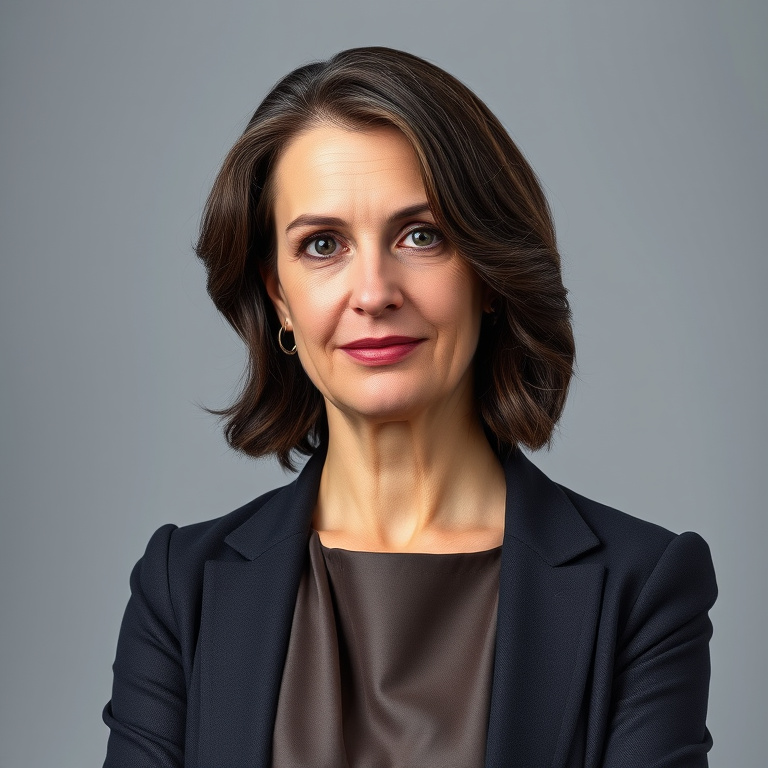
Victoria Hayes is Editor-in-Chief at Aussie Wire Hub, overseeing editorial standards, publication decisions and corrections.