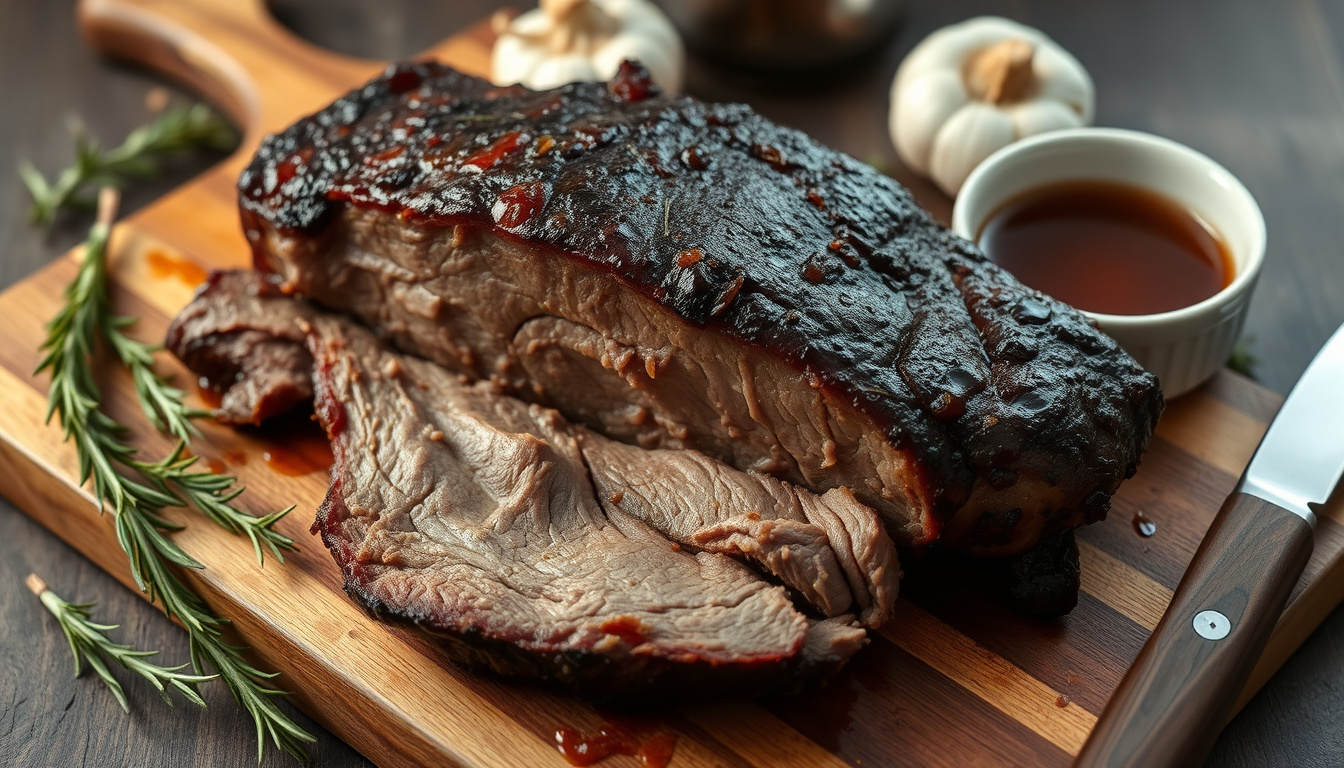
There’s nothing quite like the anticipation of pulling a perfectly tender beef brisket from the slow cooker, only to have it fall apart at the touch of a fork. But getting there requires more than just dumping meat in a pot and walking away — the science of collagen breakdown and moisture retention separates melt-in-your-mouth results from dry, tough disappointment, and this guide walks through cooking times, best liquids, common mistakes, and the oven comparison so you can nail that fall-apart brisket every time.
Average cooking time on LOW: 8–10 hours ·
Ideal internal temperature for tenderness: 195–205°F ·
Typical brisket flat weight: 3–5 pounds ·
Most common cooking liquid used: Beef broth or stock
Basic slow cooker brisket steps
- Trim the fat cap to about ¼ inch thickness
- Sear the brisket in a hot pan with oil for 3–4 minutes per side to build crust
- Place the brisket in the slow cooker with ½ to 1 cup of beef broth and aromatics
- Cook on LOW for 8–10 hours until internal temperature reaches 195–205°F
- Rest the brisket for at least 15 minutes before slicing against the grain
Quick snapshot
- LOW: 8–10 hours (Mashed cooking advice)
- HIGH: 6–8 hours (less tender) (Mashed cooking advice)
- Internal temp: 195–205°F (The MeatStick grill temp guide)
- Beef broth or stock – most popular (Mashed expert acidity)
- Beer or wine – adds flavor and acidity (Mashed expert acidity)
- Minimal liquid – brisket releases its own juices (Mashed minimal liquid approach)
- Not trimming fat (The MeatStick trimming guide)
- Skipping sear (BarbecueBible Maillard reaction)
- Too much liquid (The MeatStick trimming guide)
- Slicing with the grain (The MeatStick trimming and slicing)
- Slow cooker: set-and-forget, very tender (Mashed expert advice)
- Oven: better browning, faster (5 hrs at 320°F) (Mashed expert advice)
- Both excellent; choice depends on convenience vs crust (Mashed expert advice)
Five key dimensions to know before you start: time, temperature, liquid, technique, and the oven alternative.
| Factor | Details |
|---|---|
| Minimum cooking time on LOW | 8 hours (Mashed cooking advice) |
| Ideal internal temperature | 200°F (The MeatStick internal temp guide) |
| Common liquid choice | Beef broth |
| Typical brisket weight | 3–5 lbs |
| Searing recommended | Yes |
How long should I slow cook a beef brisket for?
Typical cooking times for brisket in a slow cooker
- 8 to 10 hours on LOW setting is standard for a 3–5 pound brisket
- 6 to 8 hours on HIGH may produce less tender results because collagen needs sustained low heat to break down fully
- Some recipes can take as long as 16 to 18 hours for very large cuts
Factors that affect cooking time
- Brisket size and thickness: a 5-pound flat takes longer than a 3-pound flat
- Fat content and marbling: more fat means longer rendering time
- Whether the brisket is cold from the fridge or at room temperature when it goes in
- How often the lid is lifted — each release adds 20–30 minutes total cook time
How to tell when brisket is done
- Internal temperature should reach 195–205°F for proper collagen breakdown
- Brisket is done when a fork inserts easily with little resistance — the “probe tender” test
- The meat should visually shrink to 30% to 40% of its original size during the cook (Char-Griller visual cues)
The LOW setting is your friend here. While it takes longer, low-and-slow allows connective tissue to melt gradually, while HIGH can overcook the exterior before the interior has a chance to tenderize. For anyone aiming for fall-apart results, patience on LOW beats speed on HIGH every time.
The implication: cooking brisket on LOW for 8–10 hours gives collagen time to convert to gelatin, turning tough meat fork-tender.
What liquid is best for slow cooking brisket?
Beef broth versus other liquids
- Beef broth or stock is the most commonly recommended liquid for slow cooker brisket
- Chicken broth can work but provides a milder flavor
- Water alone is not recommended — it lacks the gelatin and seasoning that broth provides
Using beer, wine, or vinegar for flavor and tenderness
- Acidic ingredients like wine or vinegar help break down connective tissue, complementing the long cook time
- Beer adds maltiness and depth — a dark ale or stout works well with beef
- A splash of apple cider vinegar in the broth brightens the final jus
Avoiding too much liquid: how brisket releases its own juices
- Brisket is roughly 70% water and releases significant moisture as it cooks
- Too much liquid can dilute the final gravy; some recipes use only sliced onions which release moisture
- Aim for about 1/2 to 1 cup of liquid for a 3–5 pound brisket — just enough to create steam
The liquid choice isn’t just about flavor — it’s about moisture balance. Add too little and the brisket can dry out; add too much and you lose the rich, beefy concentrate that makes slow-cooked brisket special. A single cup of broth plus aromatic vegetables gives you the best of both worlds: steam circulation and a concentrated jus.
What this means: the right liquid balance creates a concentrated jus that enhances rather than dilutes the beef flavor.
What are common mistakes when slow cooking brisket?
Not trimming the fat cap properly
- Leaving too much fat leads to greasy results; a 1/4-inch fat cap is a good target
- Too little fat leaves the meat dry — the cap acts as a self-basting layer during the long cook
- Trim off any hard, yellow fat while leaving the soft white fat that will render
Skipping the sear
- Searing creates browning and adds flavor through the Maillard reaction
- A hot pan with oil for 3–4 minutes per side builds a crust that the slow cooker can’t replicate
- Without a sear, the brisket looks pale and lacks the deep, caramelized beef flavor
Overcooking or undercooking
- Undercooking leaves collagen intact — the brisket is tough and chewy
- Overcooking can dry out the meat as muscle fibers tighten and expel moisture
- Pull the brisket at 200°F internal and let it rest — carryover cooking will bring it a few degrees higher
Using too much liquid
- Brisket releases its own juices; drowning it in broth turns the slow cooker into a soup pot
- The result: a diluted jus and meat that is steamed rather than braised
- Stick to 1/2 to 1 cup of liquid for the best concentration
Cutting the brisket against the grain
- Brisket should be sliced against the grain for tenderness
- The grain runs lengthwise on the flat; identify it before slicing
- Cutting with the grain produces long, stringy, tough slices
The biggest mistake is actually a chain of three: skipping the sear, using too much liquid, and then slicing with the grain. Each error compounds — pale color, weak flavor, watery jus, and tough texture. Fix any two and the brisket improves dramatically; fix all three and you’re in competition territory.
Is brisket better in the oven or slow cooker?
Four key differences, one pattern: each tool excels at a different priority.
| Factor | Slow Cooker | Oven |
|---|---|---|
| Cooking time | 8–10 hours on LOW | ~5 hours at 320°F |
| Browning / crust | None — needs sear beforehand | Excellent — develops natural crust |
| Moisture retention | High — sealed environment traps steam | Moderate — dry heat can dry surface |
| Convenience | Set-and-forget | Needs occasional checking |
Texture and moisture differences
- Slow cooker produces very tender, moist brisket with low maintenance — the sealed lid traps steam and keeps meat submerged in its own juices
- Oven allows for better browning and a richer crust — dry air evaporates surface moisture and concentrates flavor
- Oven cooking at 325°F is what Chef Mark Strausman recommends for fork-tender results
Convenience and time requirements
- Slow cooker: 5 minutes of prep, then walk away for 8–10 hours
- Oven: requires an initial sear in a pan on the stove, then transfer to a roasting pan with lid or foil
- Oven method demands occasional lid checks and liquid adjustments — not truly set-and-forget
Flavor development and browning
- Oven wins on crust — the dry heat creates a bark that the slow cooker environment cannot produce
- Slow cooker wins on moisture — the brisket stays bathed in its own juices, producing a tender, spoonable texture
- A compromise: sear in a pan, then finish in the slow cooker — you get crust plus moistness
When to choose each method
- Choose the slow cooker when convenience is king: you want to start in the morning and eat at dinner with zero fuss
- Choose the oven when you have time to monitor and want a richer, more pronounced beefy flavor with a bark
- Both methods can yield excellent results; the choice depends on desired texture and available time
The catch: the best method depends on whether the cook prioritizes convenience or crust — and both paths lead to excellent brisket.
Why is my brisket still tough after 7 hours?
Insufficient cooking time
- Brisket typically needs 8–10 hours on LOW to fully break down collagen — 7 hours is often too short
- Collagen converts to gelatin at around 195–205°F; it’s not a timer, it’s a temperature target
- If your brisket hasn’t hit 195°F internally after 7 hours, it needs more time, not higher heat
Incorrect temperature setting (HIGH vs LOW)
- Cooking on HIGH can cook the meat faster but may not allow enough time for collagen to gelatinize fully
- HIGH setting pushes the meat past 200°F quickly on the surface, but the interior may lag behind
- Chef Mark Strausman warns that the biggest brisket mistake is cooking it too quickly at too high a temperature
Low-fat or thin cut of brisket
- A lean brisket (like the flat cut) may dry out before becoming tender because it lacks the fat to keep it moist
- Flat cuts have less marbling than the point cut and benefit from extra liquid or wrapping
- Thin cuts cook faster but also dry out faster — aim for at least 3 pounds to have enough mass for the long cook
Not enough liquid or lid lifted too often
- Lifting the lid releases heat and steam, extending the cooking time by up to 20–30 minutes per lift
- Resist the urge to check every hour — trust the slow cooker to do its job
- If you must check, do it quickly and replace the lid immediately
Undercooked connective tissue
- Brisket is loaded with collagen — it’s a tough working muscle that needs time to break down
- At 160–170°F, collagen begins to shrink and squeeze, making the meat seem tough — this is normal
- Keep cooking through the “stall” until the internal temperature reaches 195–205°F, and the collagen has fully gelatinized
For home cooks who find themselves staring at a tough brisket at dinner time, the solution is simple: turn the slow cooker back on, cover it, and wait another hour or two. Next time, start earlier. The single most reliable fix for a tough brisket is adding time, not temperature.
The implication: tough brisket at 7 hours is a solvable problem — more time, not higher heat, is the answer.
“The biggest mistake people make when cooking brisket is cooking it too quickly at too high a temperature.”
— Chef Mark Strausman, Mashed expert interview
“Low and slow is the standard because brisket is a tough, collagen-rich cut that benefits from long cooking to become tender.”
Summary
Slow cooking beef brisket is a lesson in patience and temperature management. The cut demands sustained low heat not because it’s fussy, but because its dense collagen network needs hours of gentle warmth to transform into tender, juicy meat. For home cooks, the choice is between the set-and-forget convenience of the slow cooker and the richer crust of the oven — each has its place, and neither is wrong. The implication: master the internal temperature target of 195–205°F, respect the lid, and slice against the grain, and you’ll consistently produce brisket that lives up to its reputation. For the cook who values flavor depth, the oven plus a sear is the path; for the cook who values convenience and guaranteed tenderness, the slow cooker wins every time.
För den som vill ha en djupgående guide med specifika vätskor och tidsangivelser rekommenderas guide för långkokt brisket i slow cooker som går igenom vanliga misstag och hur man maximerar saftigheten.
Frequently asked questions
Can you cook beef brisket in a slow cooker?
Yes, beef brisket is ideal for a slow cooker. The moist, sealed environment breaks down collagen over 8–10 hours on LOW, producing tender results. Sear the brisket first for flavor, then place it in the slow cooker with minimal liquid and aromatics.
Do you need to add liquid to a slow cooker for brisket?
Yes, but very little — about 1/2 to 1 cup of beef broth is enough. The brisket releases its own juices as it cooks, so adding too much liquid will dilute the final gravy. Some recipes use only sliced onions, which release enough moisture to keep the environment steamy.
Should I sear brisket before slow cooking?
Yes, searing is strongly recommended. It develops browning through the Maillard reaction, which adds depth and complexity to the flavor that the slow cooker alone cannot produce. Sear each side for 3–4 minutes in a hot pan with oil before transferring to the slow cooker.
What temperature should a slow cooker be for brisket?
The LOW setting on most slow cookers maintains a temperature around 200°F, which is ideal for breaking down brisket’s collagen over 8–10 hours. The HIGH setting reaches about 300°F but can cause the meat to cook too quickly without allowing enough time for collagen to gelatinize.
Can I cook brisket from frozen in a slow cooker?
It is not recommended. Cooking frozen brisket in a slow cooker keeps the meat in the food safety danger zone for too long, and the uneven thawing can result in overcooked edges and an undercooked center. Thaw the brisket completely in the refrigerator before cooking.
How to store leftover slow cooked brisket?
Store leftover brisket in an airtight container in the refrigerator for up to 4 days. Keep it submerged in its cooking juices to maintain moisture. To reheat, use a low oven or a covered skillet with a splash of broth; avoid the microwave, which tends to dry out the meat.
What to serve with slow cooked beef brisket?
Classic pairings include creamy mashed potatoes, roasted root vegetables, coleslaw, or crusty bread to soak up the jus. For a lighter option, a fresh green salad with a tangy vinaigrette balances the richness of the brisket. Horseradish or a mustard sauce makes a sharp, complementary condiment.
Source: Mediterranean Diet Recipes
· Dairy Milk Chocolate Facts

Megan Morrison covers culture, lifestyle and society across Australia for Aussie Wire Hub.