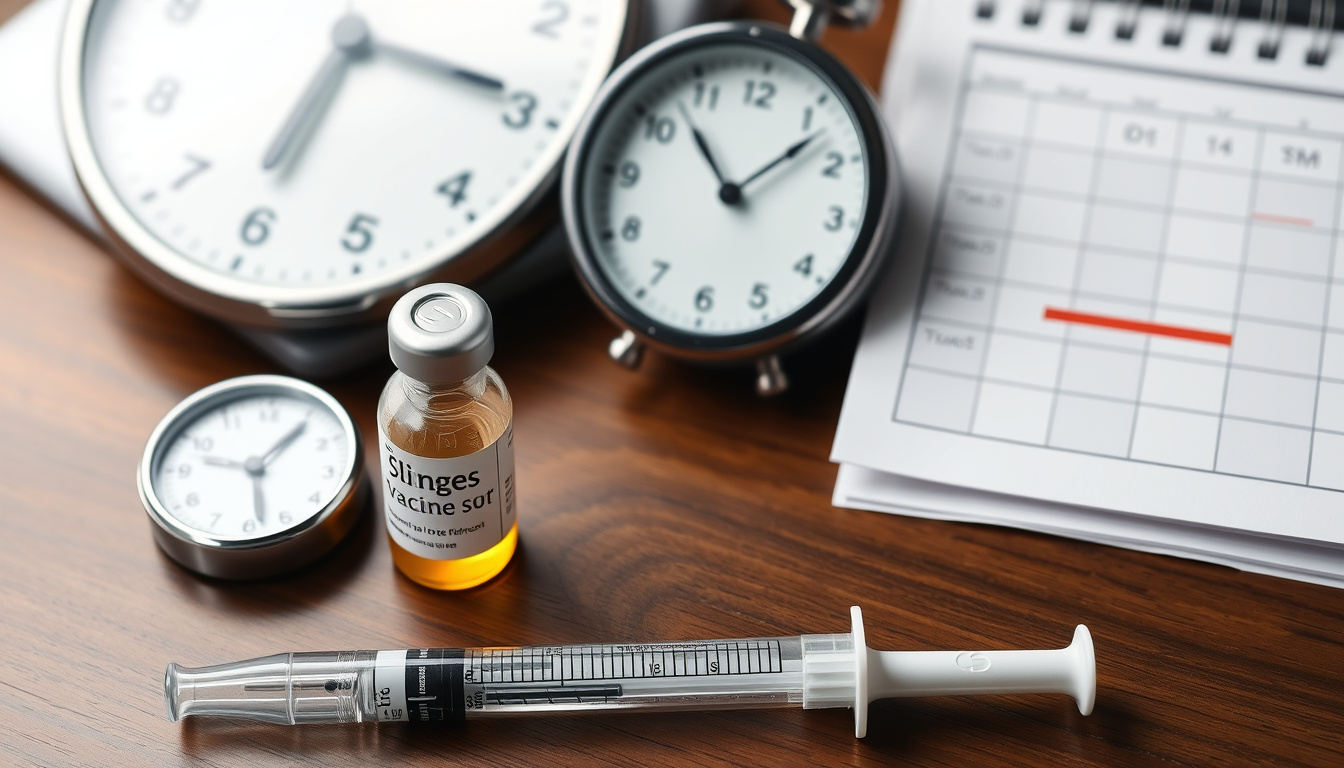

Many adults 50 and older approach Shingrix with a mix of hope and dread—the vaccine offers strong protection against a painful condition, but the temporary discomfort can be surprisingly intense. This guide walks you through what side effects to expect, how long they typically last, and why that second dose often hits harder than the first.
Most common side effect: Injection site pain ·
Typical duration: 2–3 days ·
Second dose reaction: Often stronger ·
Serious reactions reported: Rare ·
Sources mentioning fatigue: CDC, NHS
Quick snapshot
- Pain at injection site occurred in 78% of recipients (FiercePharma)
- Muscle pain affected 44.7%–45% of recipients (FiercePharma)
- Most side effects resolve within 2–3 days (Medical News Today)
- Exact frequency of rare serious events
- Individual variation in second-dose intensity
- Plan rest for 1–3 days after each dose
- Know the warning signs that warrant a doctor’s call
- Rest and hydration speed recovery
- Acetaminophen or ibuprofen manage pain
- Timing doses before weekends helps
Clinical trial data documents the full spectrum of Shingrix side effects, with injection site pain being the most frequently reported reaction.
| Symptom | Incidence | Source |
|---|---|---|
| Injection site pain | 78% | FiercePharma (FDA trial data) |
| Injection site redness | 38% | SHINGRIX HCP (official prescribing information) |
| Injection site swelling | 25.9% | SHINGRIX HCP |
| Muscle pain (myalgia) | 44.7%–45% | SHINGRIX HCP |
| Fatigue | 44.5%–45% | SHINGRIX HCP |
| Headache | 37.7%–38% | SHINGRIX HCP |
| Shivering | 27% | SHINGRIX HCP |
| Fever | 21% | SHINGRIX HCP |
| Gastrointestinal symptoms | 17% | SHINGRIX HCP |
| Activity-limiting effects | 1 in 6 recipients | FiercePharma |
What kind of reaction can you expect from the shingles vaccine?
Common reactions
Shingrix produces two broad categories of side effects: local reactions at the injection site and systemic symptoms that affect the whole body. Local reactions are the most common and include pain, redness, and swelling where the needle goes in. According to FDA trial data, pain at the injection site occurred in 78% of Shingrix recipients—making it far more common than with many routine vaccines. Redness affected 38% of recipients, and swelling occurred in roughly 26%.
Systemic symptoms are widespread bodily responses that can include muscle pain, fatigue, headache, shivering, fever, and gastrointestinal issues like nausea or diarrhea. The official Shingrix prescribing information shows muscle pain (myalgia) affected 44.7%–45% of vaccine recipients, fatigue hit about 44.5%, and headache occurred in 37.7%–38% of people. Fever was less common but still affected 21% of recipients aged 50 and older. Gastrointestinal symptoms were reported in 17% of this population.
Mild symptoms
For most people, these symptoms are manageable and self-limiting. A fever above 103°F (39.4°C) is the notable exception—this warrants immediate medical attention. Serious allergic reactions are rare but may include hives, facial swelling, throat swelling, difficulty breathing, a fast heart rate, dizziness, or weakness. Healthcare providers are advised to have epinephrine available when administering Shingrix for this reason.
The implication: local and systemic reactions together affect the majority of recipients, but the intensity varies widely—most people recover without intervention.
Most symptoms are mild to moderate. One in six Shingrix recipients experienced side effects severe enough to keep them from normal activities—but this is still temporary.
How soon after shingles vaccine do you feel bad?
Onset for first dose
Side effects can begin appearing immediately after the vaccine is administered. Injection site reactions often start while you’re still at the clinic, with pain and tenderness developing over the next few hours. Systemic symptoms like fatigue and headache typically emerge within the first day. According to Healthline, chills, fever, and gastrointestinal upset usually appear within 24–48 hours of the first dose.
The immune system’s response is responsible for these effects. Shingrix contains an adjuvant—a substance that boosts the immune response—which is why it produces stronger reactions than older vaccines. This stronger response is actually a sign that the vaccine is working as intended.
The pattern: the adjuvant is the key driver behind the pronounced side effect profile—more immune activation means better protection but more noticeable symptoms.
Onset for second dose
The second dose tends to produce a faster and more pronounced immune response. Symptoms often develop within hours rather than days, and the intensity is typically greater than after the first shot. Healthline reports that muscle pain, chills, fatigue, and headache are all more common after the second dose than the first. Many patients describe feeling “hit by a truck” within 12–24 hours of receiving dose two.
Your immune system remembers the first dose. That memory triggers a faster, stronger response the second time around—which means worse symptoms, but also stronger protection.
What are the worst side effects of the shingles shot?
Serious reactions
The majority of Shingrix side effects are temporary and manageable. However, rare serious events have been documented. An increased risk of Guillain-Barré syndrome—a neurological condition causing muscle weakness and potentially paralysis—has been observed during the 42 days following Shingrix vaccination in postmarketing observational studies, according to the official SHINGRIX HCP resource. This risk remains small, and regulatory agencies continue to monitor the vaccine’s safety profile.
Syncope (fainting) can also occur in association with Shingrix administration, particularly immediately after the injection. Healthcare providers are advised to have procedures in place to prevent falling injuries. Neuropathy is listed as a recognized adverse event in published case reports, with documented instances of prolonged neurological and musculoskeletal symptoms including tingling and burning sensations lasting approximately two weeks.
Understanding the risk profile
It’s important to contextualize these risks. Guillain-Barré syndrome has been observed at a rate of approximately 3 per 100,000 Shingrix recipients in postmarketing surveillance—a fraction of a percent. The risk window is limited to 42 days after vaccination. By contrast, shingles itself carries a much higher risk of serious complications, including long-term nerve pain (postherpetic neuralgia) that can persist for months or years.
The risk of serious neurological complications from Shingrix is extremely low. The risk of debilitating complications from shingles—especially in adults 50 and older—is substantially higher.
Are the side effects of the second Shingrix shot as bad as the first?
First vs. second dose
The answer is a clear yes: the second dose of Shingrix typically produces stronger side effects than the first. Healthline confirms that muscle pain, chills, fatigue, and headache are all more common after dose two. This heightened response occurs because your immune system recognizes the vaccine antigen from the first dose and mounts a more vigorous defense. The adjuvanted formulation amplifies this response further.
Geriatrician Arthur Hayward, M.D., has expressed concern that patients may hesitate to return for their second Shingrix dose after experiencing difficult side effects from the first. This is a documented adherence challenge that healthcare providers are working to address through patient education about what to expect.
Duration differences
While the second dose hits harder, the overall duration of symptoms is similar. Most recipients recover within 2–3 days of either dose. Medical News Today reports that most Shingrix side effects resolve within this timeframe. Chills and muscle pain typically disappear within 2–3 days after receiving Shingrix, according to Healthline. However, some symptoms have been reported up to 30 days after vaccination in isolated cases, including injection site itchiness, malaise, joint pain, nausea, and dizziness.
The implication: the second dose’s greater intensity does not translate to longer recovery—the timeline remains roughly parallel.
Both doses follow the same 2–3 day recovery window, even though the second feels worse while it’s happening.
How long are you sick after the 2nd shingles vaccine?
Typical recovery time
For most people, the answer is straightforward: plan for 2–3 days of feeling unwell. Medical News Today reports that most Shingrix side effects resolve within this window after either dose. Symptoms typically peak around 24–48 hours post-vaccination and then gradually improve. By day three or four, most recipients are back to their normal activities.
Fatigue can range from mild to severe and typically resolves within a few days with adequate rest, hydration, and nutrition. Healthcare providers generally recommend taking it easy for 24–48 hours after the shot, particularly after the second dose. Light activity is fine; strenuous exercise may need to wait until symptoms subside.
When to seek help
Most symptoms are self-limiting, but certain signs warrant a call to your healthcare provider. According to the NHS, you should speak to your GP if you experience persistent muscle pain, tiredness, chills, or fever that doesn’t improve after a few days. A fever of 103°F (39.4°C) or higher requires immediate medical attention. Signs of an allergic reaction—hives, facial swelling, difficulty breathing—also require emergency care.
If symptoms persist beyond a week or two, or if you experience unusual neurological symptoms like prolonged numbness, tingling, or weakness, discuss these with your doctor. These cases are uncommon but worth professional evaluation.
Upsides
- Highly effective at preventing shingles (over 90% efficacy)
- Protection lasts longer than the previous Zostavax vaccine
- Side effects are temporary and self-limiting for most people
- Reduced risk of postherpetic neuralgia, a debilitating complication
- Recommended for adults 50 and older regardless of prior chickenpox exposure
Downsides
- Second dose often produces stronger reactions than the first
- 1 in 6 recipients experience activity-limiting side effects
- Symptoms can last up to a week in some cases
- Not studied in pregnant or nursing women
- Requires two doses spaced 2–6 months apart
How to manage shingles vaccine side effects
While you can’t prevent Shingrix side effects entirely, several strategies can help you weather them more comfortably. Rest is the most important recommendation—plan for reduced activity for 24–48 hours after each dose, especially after the second shot. Light activities like walking are fine, but strenuous exercise is best postponed until symptoms subside.
Over-the-counter pain relievers can help manage discomfort. Acetaminophen (Tylenol) is generally preferred for reducing fever and pain. NSAIDs like ibuprofen can also be effective, but if you have any kidney or gastrointestinal concerns, check with your doctor first. Applying a cool compress to the injection site can reduce local pain and swelling.
Staying well-hydrated and eating nutritious foods supports your immune response and recovery. Avoid scheduling the vaccine right before important commitments or strenuous activities. Many patients find it helpful to receive the vaccine on a Thursday or Friday to have the weekend for recovery, particularly for dose two.
“Fatigue after Shingrix can range from mild to severe and typically resolves within a few days with adequate rest, hydration, and nutrition.”
“Speak to your GP if muscle pain, tiredness, chills, fever or any other side effect that worries you.”
— NHS
Shingrix vs. Zostavax: Side effect comparison
Shingrix replaced Merck’s Zostavax on the CDC’s list of recommended vaccines, and the two vaccines have meaningfully different side effect profiles. According to FDA trial data reported by FiercePharma, Zostavax produced injection site pain in 53.9% of patients, erythema in 48.1%, and swelling in 40.4%. Shingrix produces pain in 78% of recipients—a higher rate, reflecting its stronger immune response.
However, Shingrix offers superior protection. Zostavax’s efficacy declined significantly with age, reaching only around 38% effectiveness in adults over 70. Shingrix maintains over 90% efficacy across all age groups studied, including adults 50 and older and those 70 and above. The trade-off is a more pronounced temporary immune response.
Related reading: Cognitive Behavioral Therapy · Dairy Milk Chocolate Facts: Myths, Health & More
goodrx.com, pmc.ncbi.nlm.nih.gov, shingrixhcp.com, health.harvard.edu, shingrix.com, connect.mayoclinic.org, healthline.com, cdc.gov, pmc.ncbi.nlm.nih.gov
While pictures and early signs of shingles reveal a painful, unilateral blistering rash, shingles vaccine side effects typically involve milder pain, fatigue, and brief fever.
Frequently asked questions
Is it worth having the shingles vaccine?
Yes, for most adults 50 and older. Shingles can cause severe, long-lasting nerve pain (postherpetic neuralgia) that significantly impacts quality of life. Shingrix is over 90% effective at preventing shingles—far superior to its predecessor—and the temporary side effects are a fraction of the risk posed by the disease itself.
Should you rest after a shingles vaccine?
Yes. Most healthcare providers recommend taking it easy for 24–48 hours after each dose, particularly after the second shot. Plan for reduced activity, stay well-hydrated, and avoid strenuous exercise until symptoms subside. Light activity like walking is fine if you’re feeling up to it.
Does the shingles vaccine make you feel awful?
It can. Many recipients describe feeling “hit by a truck” after dose two, with significant fatigue, muscle aches, chills, and headache. However, these symptoms typically peak within 24–48 hours and resolve within 2–3 days. One in six recipients experience effects severe enough to disrupt normal activities, but this is temporary.
How many days are you sick after a shingles vaccine?
Most people feel unwell for 2–3 days after each dose. Symptoms like injection site pain, fatigue, muscle aches, and headache typically peak around day one or two and then gradually improve. Some patients report symptoms persisting for up to a week, and isolated reports of effects lasting up to 30 days exist, though these are uncommon.
How to feel better after a 2nd shingles shot?
Rest is the most important strategy. Additional measures include: applying a cool compress to the injection site, taking acetaminophen or ibuprofen for pain and fever (if your doctor approves), staying well-hydrated, eating nutritious foods, and rescheduling strenuous activities for after recovery. Consider timing your appointment before days when you can afford to take it easy.
Can Shingrix side effects last longer than a week?
In most cases, no. The vast majority of recipients recover within 2–3 days. However, some symptoms have been reported up to 30 days after vaccination in isolated cases. If symptoms persist beyond a week or two, or if you experience unusual neurological symptoms, consult your healthcare provider.

Grace Clarke leads fact-checking, source verification and corrections at Aussie Wire Hub.