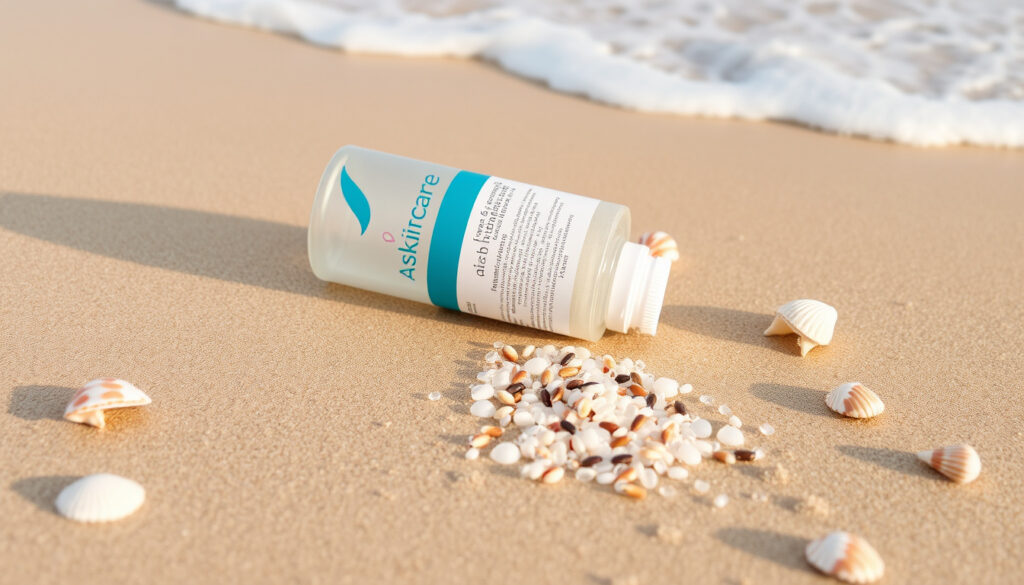
Aussie Skincare Microbead Recall: 9 Products Pulled
You probably grabbed a face scrub without thinking twice about what’s inside those tiny beads. But in November 2025, the New South Wales Environment Protection Authority (EPA) ordered six companies to stop selling nine skincare products because they contained banned plastic microbeads, and now we unpack which brands were caught, what this means for your bathroom shelf, and how to avoid hidden microplastics in your routine.
Products pulled from shelves: 9 ·
Brands ordered to stop sales: 6 ·
Banned ingredient: plastic microbeads ·
Year Australia phase-out began: 2015 ·
Regulatory body: NSW Environment Protection Authority (EPA)
Quick snapshot
- Nine products were ordered withdrawn from NSW shelves in November 2025 (7NEWS (Australian news outlet))
- Six brands including Natio and Coles were implicated (SBS News (multicultural broadcaster))
- The offending ingredient was plastic microbeads (polyethylene) (NSW EPA (state regulator))
- Whether the brands will face fines beyond the stop-sale order (SBS News)
- How many consumers have already purchased and used the recalled products (7NEWS)
- Whether the products were sold in other states (SBS News)
- NSW ban on microbeads in rinse‑off products took effect 1 November 2022 (NSW EPA (state regulator))
- Enforcement action began in April 2024 (NSW EPA) (NSW EPA (state regulator))
- Consumers can return recalled products to stores for refunds (7NEWS)
- Further enforcement actions possible under the PRCE Act (NSW EPA)
The six‑row key‑facts table below shows the core enforcement data at a glance.
| Label | Value |
|---|---|
| Date of enforcement | November 2025 |
| Jurisdiction | New South Wales, Australia |
| Number of products recalled | 9 |
| Number of companies penalized | 6 |
| Banned substance | Plastic microbeads (polyethylene) |
| Year microbeads phased out in Australia | 2015 |
Are microbeads in face wash bad for your skin?
How microbeads harm aquatic life
- Microbeads are tiny plastic particles that do not biodegrade and accumulate in waterways (NSW EPA). They enter the food chain through fish and other marine organisms (7NEWS).
Why microbeads are banned in Australia
- The Australian government began phasing out microbeads voluntarily in 2015, and a legal ban on rinse‑off products took effect nationally from 2018 (SBS News). NSW enacted its own specific ban on 1 November 2022 (NSW EPA).
Because microbeads are designed to be rinsed off, they travel straight down the drain into waterways where fish mistake them for food. The NSW EPA enforcement shows that even after years of regulation, some brands still sold non‑compliant stock.
Bottom line: Microbeads in face wash are ecologically harmful and banned in Australia. Consumers should avoid polyethylene (PE) in any rinse‑off cosmetic.
What face cream was just recalled in Australia?
Nine products pulled from NSW shelves
- The NSW EPA issued compliance notices under the Plastic Reduction and Circular Economy Act (PRCE Act) to six businesses covering nine items (NSW EPA). Products included Natio Men’s Purifying Face Scrub and Natio Ageless Skin Renewal Exfoliator, as well as Coles Group’s KOi For Men Cleansing Face Scrub Oat & Desert Lime (NSW EPA).
Brands including Natio and Coles implicated
- Six companies were named: Aesthetics Skincare Pty Ltd, Coles Group Ltd, Frostbland Pty Ltd, JMSR Australia Pty Ltd, McPherson’s Consumer Products Pty Ltd, and Natio Pty Ltd (NSW EPA). The compliance notice orders apply only in NSW, so some of the same products could still be sold in other states (SBS News).
The enforcement is state‑specific: while the EPA acted in NSW, the same products may still sit on shelves in Queensland, Western Australia, or the ACT unless their local regulators take similar steps.
Bottom line: Nine face and body products from six brands were forced off NSW shelves in November 2025 for containing plastic microbeads. Check your labels, even if you bought them in another state.
Is Natio a clean brand?
Natio’s claims vs. regulatory findings
- Natio markets itself as a natural‑inspired Australian skincare brand. Yet two of its products — Natio Men’s Purifying Face Scrub and Natio Ageless Skin Renewal Exfoliator — were found to contain banned plastic microbeads (SBS News). This directly conflicts with a “clean” brand positioning.
Where is Natio Skincare made?
Natio’s manufacturing location
- Natio is an Australian skincare brand headquartered in Melbourne, and its products are manufactured in Australia (7NEWS). The recall affects locally made goods that still used polyethylene beads.
Bottom line: Natio is an Australian‑made brand that claimed natural positioning but was caught selling products with banned plastic microbeads. For shoppers seeking truly clean skincare, independent certification matters more than brand marketing.
Which face wash ingredients should you avoid?
Common harmful ingredients in face washes
- Avoid polyethylene (PE), polypropylene (PP), nylon, and any ingredient listed as “polyethylene beads” or “microbeads” (SBS News). Other ingredients to watch include parabens, sulfates, and phthalates. Some toothpastes also use microplastics for abrasion (7NEWS).
How to identify microplastics on labels
- Look for terms like “polyethylene” (PE), “polypropylene” (PP), “polyethylene terephthalate” (PET), or “nylon‑12” in the ingredients list. The NSW EPA advises consumers to scan the ingredient list of every rinse‑off product and return any that contain these plastics (NSW EPA).
Bottom line: Polyethylene and other plastic‑based ingredients appear in scrubs, cleansers, and even toothpaste. Read the INCI list — if you see PE, PP, or nylon, put it back.
Are microbeads banned in Australia?
Australian regulatory framework for microbeads
- Microbeads were banned in rinse‑off cosmetic products in Australia from 2018 under national agreement (SBS News). NSW later introduced its own ban effective 1 November 2022 under the Plastic Reduction and Circular Economy Act (NSW EPA).
List of banned cosmetic ingredients in Australia
- Beyond microbeads, Australia bans other ingredients such as hydroquinone in high concentrations and certain sunscreen compounds (NSW EPA). The enforcement action against microbeads is a rare example of active policing of cosmetic bans.
The NSW EPA is one of few regulators in the world to take direct enforcement against microbeads in personal care products. Other Australian states and most international markets have not matched this vigilance.
Bottom line: Yes — microbeads are banned in Australia for rinse‑off cosmetics, but enforcement gaps in 2025 show that some products still slipped through. Check state‑by‑state rules.
What is the cleanest skincare brand in the world?
Criteria for ‘clean’ skincare
- “Clean” typically means free from parabens, phthalates, sulfates, and microplastics. No official global standard exists, so certification bodies like EWG Verified and COSMOS set different benchmarks (7NEWS).
Top clean beauty brands according to industry reports
- Brands frequently cited include Drunk Elephant, RMS Beauty, Ilia, and Saie (SBS News). However, many brands claim “clean” while still using questionable preservatives. The safest approach is to cross‑reference with independent databases like EWG Skin Deep.
Bottom line: No brand can claim to be the “cleanest” in absolute terms. For Australian consumers, the safest strategy is to avoid any product listing polyethylene, polypropylene, or nylon — and to prioritise certifications over marketing.
Timeline
- – Australian government announces voluntary phase‑out of microbeads in rinse‑off cosmetics (SBS News).
- – Ban on plastic microbeads in rinse‑off products becomes law in Australia (NSW EPA).
- – NSW ban on microbeads in rinse‑off personal care products takes effect (NSW EPA).
- – NSW EPA begins enforcement action that eventually leads to compliance notices (NSW EPA).
- – Public announcement: six companies ordered to stop supplying nine products (NSW EPA).
Clarity: What we know and don’t know
Confirmed facts
- Nine products were ordered withdrawn from NSW shelves in November 2025 (7NEWS)
- Six brands including Natio and Coles were implicated (SBS News)
- The offending ingredient was plastic microbeads (polyethylene) (NSW EPA)
What’s unclear
- Whether the brands will face fines beyond the stop‑sale order (SBS News)
- How many consumers have already purchased and used the recalled products (7NEWS)
- Exact financial impact on the companies (7NEWS)
Expert perspectives
“The NSW EPA is one of the few regulators in the world to take enforcement action against plastic microbeads in personal care products.”
— NSW EPA spokesperson, in the official press release (NSW EPA)
“The compliance notices cover only NSW, so the same products can still be sold in other states.”
— SBS News report (SBS News)
“Microbeads were once widely used in cosmetics to add texture and exfoliate, but they end up in waterways where fish ingest them.”
— 7NEWS analysis (7NEWS)
These perspectives highlight the regulatory gaps and the persistent presence of plastics even after bans. For consumers, the message is clear: trust labels, not brand stories.
Frequently asked questions
Can I return a recalled skincare product for a refund?
Yes. Retailers such as Coles are expected to accept returns. Contact the store where you purchased it for their policy.
How do I know if my face wash contains microbeads?
Check the ingredients list for polyethylene (PE), polypropylene (PP), or nylon.
Are liquid facial cleansers safer than scrub ones?
Liquid cleansers typically lack solid microbeads but may contain other microplastics. Always read the full ingredient list.
What should I do if I used a recalled product?
Stop use immediately. No acute health risk is known, but environmental concerns warrant caution.
Are products from Koi skincare affected?
Yes, the Coles Group KOi For Men Cleansing Face Scrub was flagged.
Does Coles have its own brand recall?
Coles Group was issued a compliance notice for its KOi brand product.
Will more products be recalled in the future?
Likely. The NSW EPA enforcement may expand as inspections continue.
How does Australia enforce bans on cosmetic ingredients?
Each state enforces differently. NSW uses the PRCE Act with penalties up to $550,000.
More related posts
 Childcare Subsidy Calculator: Maximum Rates & Eligibility
 Manchester by the Sea – Discover the Real MA Coastal Town
 Best Free Invoice Generator: No-Signup Tools Compared
 Anatomy of a Fall: Ambiguity, Oscars & Queer Themes
 24 Hour Time: Conversions, Charts & How to Read
 Dairy Milk Chocolate Facts: Myths, Health & More
 Helly Hansen Jacket: Men’s, Women’s, Prices & Sales in Ireland
 Caleb McLaughlin: Age, Net Worth, Faith, and Salary