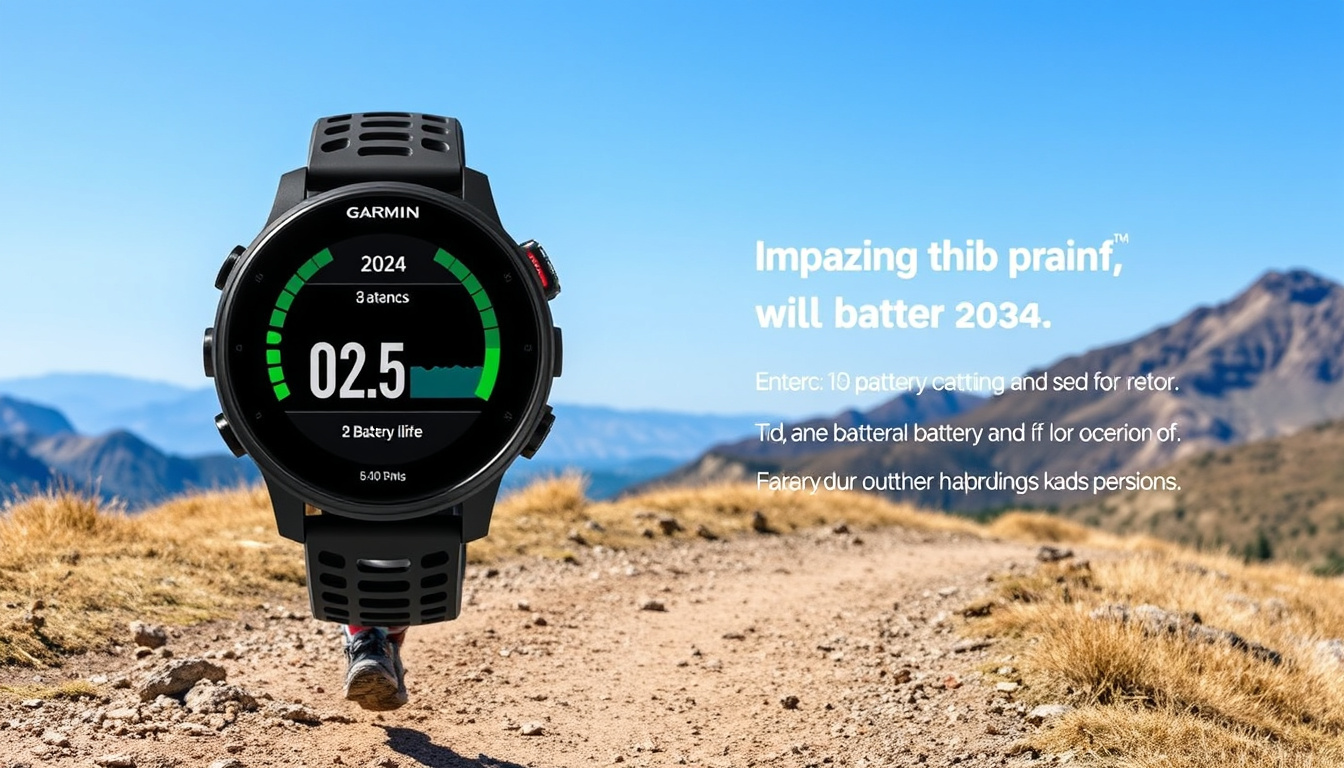
The Garmin Forerunner 255 stands as a notable option for runners seeking advanced features without flagship pricing. Released in June 2022, this multisport GPS watch brought multi-band GPS technology to Garmin’s most affordable multisport tier, fundamentally shifting expectations for what an entry-level running watch could deliver.
Independent reviews from DC Rainmaker and Tom’s Guide provide detailed hands-on analysis. The watch arrives in three configurations: a standard 46mm casing, a smaller 255S at 42mm, and a Music edition with onboard storage for phone-free training. Beyond multi-band GPS, the Forerunner 255 doubled battery life from its predecessor, introduced the Garmin Elevate V4 heart rate sensor, and delivered HRV status tracking alongside expanded training load insights.
For those interested in how sizing translates for runners, guides covering height and size comparisons offer additional context.
What Are the Key Specs and Features of the Garmin Forerunner 255?
The Forerunner 255 brings a capable specification set designed for serious runners and triathletes. Multi-band GPS appears across all variants—a feature typically reserved for premium models at double the price. The Music edition stores roughly 500 songs from Spotify or Deezer, eliminating the need to carry a phone during training sessions.
Connectivity options include Wi-Fi, Bluetooth, and ANT+, providing compatibility with power meters, bike trainers, and external heart rate monitors. The Garmin Elevate V4 optical sensor handles continuous heart rate tracking and enables HRV status monitoring for recovery insights.
Released June 2022 | Starting price approximately $350 for Music variant | Available in 46mm and 42mm (255S) casings | Key advancement: dual-frequency GPS across all models
Key features worth highlighting include the morning report that summarizes sleep and recovery before heading out, HRV status derived from overnight readings, and daily suggested workouts that extend into the future and adjust based on upcoming race calendars. Running power displays in real-time, while VO2 max estimates adapt as fitness develops.
Daily suggested workouts configurable for long training days, race calendar integration, recovery time estimates, sleep and activity tracking, plus multisport modes for triathlon transitions.
Non-music versions do not include onboard storage. Only the Music variant adds approximately 3GB of usable space for audio files and podcasts.
| Feature | Forerunner 255 | Forerunner 255S |
|———|—————-|—————–|
| **Display Size** | 1.3 inches | 1.1 inches |
| **Resolution** | 260 x 260 pixels | 218 x 218 pixels |
| **Weight** | 49g | 39g |
| **Water Resistance** | 5 ATM (swim-rated) | 5 ATM (swim-rated) |
| **Music Storage** | Up to 4GB (Music only) | Up to 4GB (Music only) |
| **Connectivity** | Wi-Fi, Bluetooth, ANT+ | Wi-Fi, Bluetooth, ANT+ |
| **Heart Rate Sensor** | Garmin Elevate V4 | Garmin Elevate V4 |
| **GPS Mode** | Multi-band | Multi-band |
How Long Is the Battery Life on the Garmin Forerunner 255?
Battery performance represents one of the most significant improvements over the Forerunner 245, with endurance essentially doubling in most configurations. Real-world testing from Black Toe Running and user reports corroborate Garmin’s specifications.
In everyday smartwatch mode, the standard Forerunner 255 delivers up to 14 days of operation, while the smaller 255S extends to 12 days. When running with GPS-only tracking, the 255 reaches 30 hours compared to 26 hours for the 255S.
Engaging all satellite systems with multi-band GPS reduces those numbers to 16 hours (255) and 13 hours (255S). Adding music playback to multi-band GPS drops endurance further to approximately 6.5 hours for the 255 and 5.5 hours for the 255S.
Independent tests document approximately 21 hours of multi-band GPS during a 2-hour ride with power meter and ANT+ connections. A 1 hour 10 minute run with music, backlight enabled, and multi-band GPS active showed roughly 13% battery depletion, projecting around 9 hours of total runtime.
Users report completing full 14-hour ultramarathons on a single charge. The quick-charge capability allows overnight sleep tracking while maintaining adequate battery for subsequent daytime use.
Garmin Forerunner 255 vs 265: Key Differences
The Forerunner 265 succeeded the 255 in 2023, though detailed specifications for the newer model remain limited in available sources. Reviews of the Forerunner 265 suggest several key upgrades, particularly in display technology.
The 265 features an AMOLED display with always-on capability, offering richer colors and deeper blacks compared to the 255’s MIP LCD screen. Screen brightness improvements also favor the newer model. Core metrics including GPS accuracy, heart rate tracking, and training load calculations remain similar between generations.
What Differs Between Forerunner 255 and 255S?
The choice between the standard Forerunner 255 and the smaller 255S extends beyond mere aesthetics. The 255S uses a 1.1-inch display versus 1.3 inches on the standard model, with resolution dropping from 260 x 260 to 218 x 218 pixels. Weight decreases from 49g to 39g, making the smaller variant noticeably lighter on the wrist.
Battery life differences are modest but consistent. The 255S delivers 12 days versus 14 days in smartwatch mode, 26 hours versus 30 hours in GPS-only mode, and 13 hours versus 16 hours with multi-band GPS enabled. These reductions reflect both the smaller battery and the reduced display size of the 255S.
The Music variant adds approximately 5g to either base model for the additional storage and Wi-Fi capabilities needed for offline audio downloads.
Is the Garmin Forerunner 255 Worth Buying in 2024?
Determining value depends heavily on individual priorities and current pricing. At approximately $350 for the Music variant, the Forerunner 255 positioned itself as the most affordable multisport watch with multi-band GPS when released. DC Rainmaker’s review notes the device remains the best budget option for dual-frequency satellite tracking.
For runners competing in ultramarathons or managing intensive training schedules, battery performance proves reliable for multi-hour events and weekly training blocks. The combination of multi-band GPS, training load insights, and HRV status delivers comprehensive analytics without requiring a flagship investment.
The trade-offs center on display technology—the 255 uses MIP LCD rather than AMOLED—and navigation capabilities. Full topo maps and turn-by-turn navigation require stepping up to models like the Forerunner 955, which also offers longer battery life and expanded storage.
The Forerunner 255 presents strong value for runners and triathletes prioritizing multi-band GPS accuracy, music storage, and training metrics at a mid-range price point. Buyers seeking the latest display technology or full navigation features should consider alternatives.
How Accurate Is the GPS and Training Data on Garmin Forerunner 255?
Multi-band GPS delivers consistently high accuracy across various environments. Testing against Google Maps, iPhone GPS, and groups of other Garmin watches confirms precise tracking during steady-state runs and interval workouts. WeeViews testing documents the 255 performing comparably to the higher-priced Forerunner 955.
Per-sport profiles allow users to adjust GPS settings, trading accuracy for extended battery life when appropriate. The all-systems multi-band mode provides maximum precision, while GPS-only mode conserves power for shorter activities.
Training data extends beyond simple GPS tracking. The Garmin Elevate V4 sensor captures heart rate continuously, enabling overnight HRV analysis that informs recovery status. Training load measurements factor in workout intensity and duration against established thresholds, providing structured guidance for peak performance periods.
Some users report potential VO2 max inaccuracies when heart rate bias remains elevated. Recalibrating heart rate settings or allowing additional wear time may improve estimation precision.
Daily suggested workouts integrate with entered race calendars, offering progressive training loads that peak appropriately before target events. Running power displays in real-time during outdoor activities, though it requires a compatible sensor or smartphone connection.
Software Evolution Timeline
Since its June 2022 launch, the Forerunner 255 has received ongoing firmware refinements through Garmin Connect. Garmin community forums document user experiences with these updates.
- June 2022: Initial launch introducing multi-band GPS, HRV status, and training load features to the Forerunner lineup
- Late 2022: Music variant release adding onboard storage for phone-free audio playback
- 2023: Firmware updates refined training load calendar awareness and race-tied workout suggestions
- 2024: Continued minor updates through Garmin Connect, addressing widget configurations and user interface elements
What Is Confirmed and What Remains Uncertain?
GPS accuracy matches external benchmarks; battery life performs as specified; HRV tracking functions via Elevate V4 sensor; training load and daily suggested workouts integrate with race calendars; Music variant stores approximately 500 songs with Wi-Fi download capability.
Current 2024 pricing not confirmed in available sources; precise differences between 255 and 265 beyond display remain unclear; availability of newer firmware features should be confirmed directly through Garmin Connect.
| Confirmed | Uncertain |
|———–|———–|
| Multi-band GPS accuracy | Current promotional pricing |
| Battery specifications | Detailed 265 vs 255 feature comparison |
| Training load metrics | Future software roadmap |
| HRV status tracking | Long-term software support timeline |
Where Does the Forerunner 255 Fit in Garmin’s Lineup?
The Forerunner 255 occupies a strategic position in Garmin’s catalog, offering multisport functionality at a price point previously unavailable with such comprehensive features. It represents the entry point for dual-frequency GPS in the Forerunner series, making advanced satellite tracking accessible to amateur athletes and serious hobbyists.
Target users include recreational triathletes, competitive runners logging high weekly mileage, and fitness enthusiasts seeking structured training guidance without flagship complexity. The device bridges the gap between pure running watches like the Forerunner 245 and premium multisport units like the Forerunner 955.
What Do Experts and Users Say?
Independent assessments generally praise the Forerunner 255 for delivering on its specifications.
“Full multisport watch” with precise GPS and heart rate tracking, battery performance matching specifications, and the best budget multi-band GPS option available. — DC Rainmaker
The watch offers multiple sizes, accurate metrics, music support, and strong battery life, enabling great phone-free running experiences. — Tom’s Guide
User reports from ultramarathon runners confirm battery reliability during 14-hour events. Community forums document performance exceeding official specifications under demanding conditions involving continuous music playback, backlight activation, and multi-band GPS tracking.
Final Assessment
The Garmin Forerunner 255 remains a compelling choice for dedicated runners and triathletes who want advanced features without flagship pricing. Its multi-band GPS accuracy, training load analytics, and music storage capabilities deliver practical value that justifies the investment for users who will leverage these functions regularly.
Battery life performs as advertised across all configurations, and the quick-charge capability addresses concerns about overnight tracking. For those transitioning from non-GPS watches or upgrading from older Garmin models, the Forerunner 255 represents a meaningful step forward in both technology and functionality.
Pairing the watch with appropriate running gear maximizes training effectiveness. Reviews of complementary equipment like the Nike Vaporfly 3 offer additional context for complete race-day setups.
Frequently Asked Questions
What software updates have been released for the Forerunner 255?
Since launch, firmware has introduced race-tied workouts and training load calendar awareness improvements. Garmin releases ongoing updates through Garmin Connect; checking the app directly is advisable for the latest features.
How accurate is the GPS on the Forerunner 255?
Multi-band GPS provides high accuracy that matches Google Maps and iPhone GPS. Testing confirms performance comparable to the Forerunner 955 during steady-state and interval workouts.
Can I store music on the Forerunner 255?
Only the Music variant includes onboard storage for approximately 500 songs from Spotify or Deezer. Standard and 255S versions do not support this feature.
What is the battery life difference between 255 and 255S?
The 255S has reduced battery life across all modes: 12 days versus 14 days in smartwatch mode, 26 hours versus 30 hours in GPS-only mode, and 13 hours versus 16 hours with multi-band GPS enabled.
Does the Forerunner 255 have full maps?
The Forerunner 255 does not include full topographic maps. Routes can be stored and displayed, but turn-by-turn navigation requires a model with expanded mapping capabilities like the Forerunner 955.
Is the Forerunner 255 suitable for swimming?
Yes, the 5 ATM water resistance rating makes it appropriate for swimming activities. Both the standard 255 and 255S variants carry swim-rated certification.
What heart rate sensor does the Forerunner 255 use?
It incorporates the Garmin Elevate V4 optical heart rate sensor, which also enables HRV status tracking for overnight recovery analysis.

Chloe Tran covers business, markets and economic policy for Aussie Wire Hub.