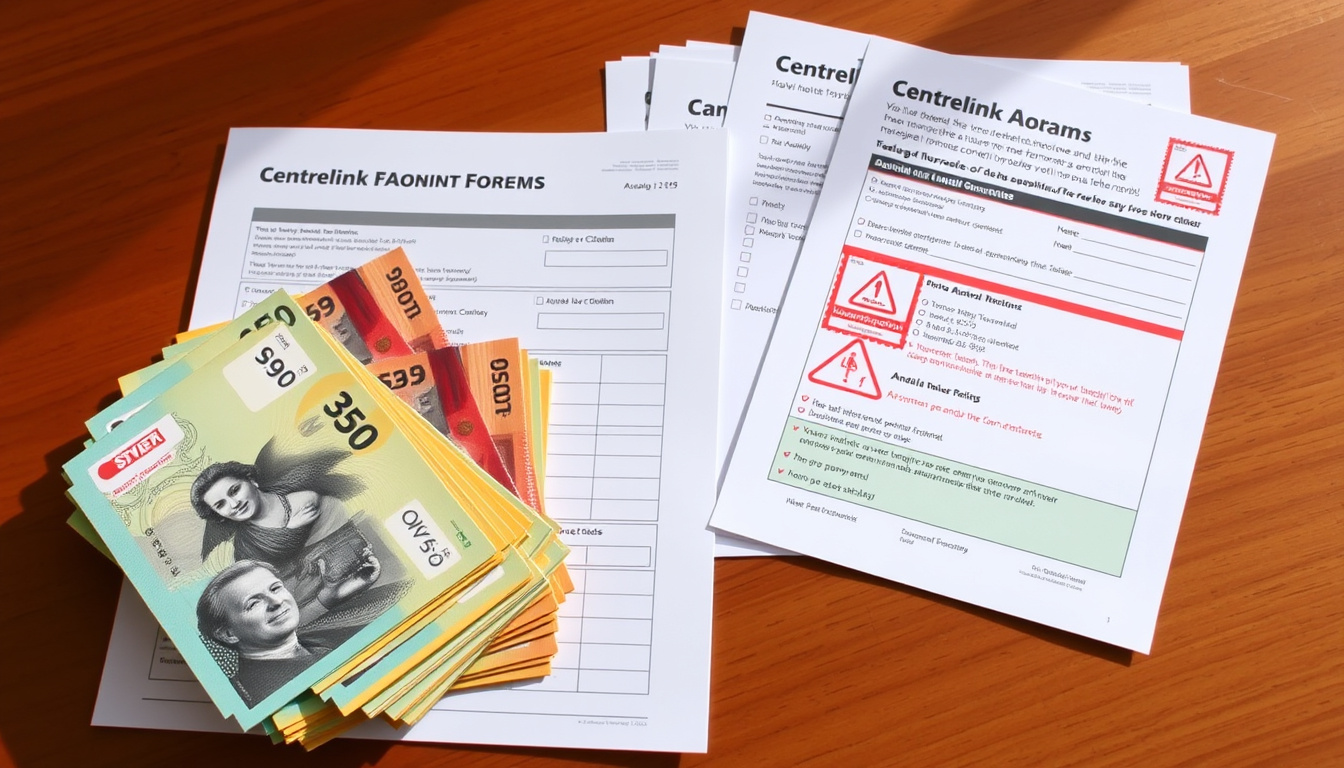

Social media posts and unsolicited messages are circulating claims about a $950 Centrelink payment landing in Australian accounts — but the government says these payments don’t exist. The confusion traces back to a series of one-off bonuses that actually did happen in 2009, and scammers have been exploiting that memory ever since.
Historical Amount: $950 ·
Bonus Year: 2009 ·
Supplement End: June 2010 ·
Income Limit: $80,000 ·
Fake Claims: $750, $950, $1,800, $4,100
The table below summarises what is confirmed versus what remains unverified or actively false.
Quick snapshot
- $950 bonuses paid in 2009 to eligible recipients earning under $80,000 (Australian Government Department of Social Services)
- Temporary $950 supplement to Education Entry Payment ended 30 June 2010 (Services Australia official document)
- Whether any current $950 Centrelink payment is active in 2025 or 2026
- Whether social media claims about “950 centrelink payment approved” have any basis
- 2009: Multiple $950 one-off bonuses distributed (Australian Government Department of Social Services)
- 2010: Education supplement ended; no further $950 payments announced (Australian Government Department of Social Services)
- Services Australia continues removing scam content impersonating Centrelink and myGov (Commonwealth Bank newsroom report)
- Phishing losses reached $97.6 million across Australia in 2025 (Commonwealth Bank newsroom report)
Who is eligible for Centrelink bonus?
In 2009, the Australian Government rolled out several one-off bonuses worth $950, each targeting specific groups. Eligibility hinged on income thresholds and payment types rather than a universal Centrelink recipient status.
Income thresholds
The Tax Bonus for Working Australians paid $950 to taxpayers with taxable income up to $80,000. The amount tapered for higher earners: $650 for those earning $80,001–$90,000, and $300 for income between $90,001–$100,000. The Australian Taxation Office processed these payments automatically from April 2009 — no application was required (Australian Government Department of Social Services).
Payment recipients
Beyond the general tax bonus, several targeted payments carried the $950 amount:
- Single Income Family Bonus — families receiving Family Tax Benefit Part B received $950, paid by Centrelink starting 11 March 2009
- Farmers’ Hardship Bonus — drought-affected farmers on exceptional circumstances payments received $950; 21,500 recipients were paid from 24 March 2009
- Back to School Bonus — families with FTB-A received $950 per school-age child (4–18 years) as of 3 February 2009
- Student bonuses — recipients of Youth Allowance, Austudy, and ABSTUDY each received a $950 one-off payment
None of these 2009 bonuses have been repeated. Each was a one-time measure tied to that year’s budget. Claims that a similar payment exists today have no official basis.
What is the $980 Centrelink payment?
The confusion around “$980” likely stems from the Education Entry Payment, which received a temporary $950 supplement until 30 June 2010. The base Education Entry Payment itself continues for eligible recipients — it is not a standalone $980 payment (Services Australia official document).
Payment details
The $950 supplement was a temporary measure added to the standard Education Entry Payment for one fiscal year. This supplement ended on 30 June 2010 and was not renewed. The standard Education Entry Payment amount is set independently and has changed since that time.
Related supplements
Services Australia maintains a Guide to Australian Government Payments that lists current payment rates and eligibility rules. This is the authoritative source for any existing Centrelink education-related payments (Services Australia official payments guide).
Numbers like “$980” in current social media posts do not match any official payment in Services Australia’s current records. These figures are usually invented or based on outdated information.
Who is eligible for the $750 payment?
There is no current $750 Centrelink payment for 2025 or 2026. Services Australia has explicitly stated that payments of $750, $950, $1,800, and $4,100 advertised in unsolicited messages “don’t exist” (Services Australia scam warning page).
Similar bonus criteria
The only Centrelink bonus close to $750 in recent history was the one-off Economic Security Payment of $900 in 2009 — which was itself a different payment entirely. The $750 figure circulating today appears only in scam content.
Household support
Legitimate household support through Centrelink comes as regular fortnightly payments (such as JobSeeker, Age Pension, or Family Tax Benefit), not lump-sum bonuses. Any message promising a specific one-off amount requires verification through official channels.
Fake Centrelink information typically uses phrases like “cash relief,” “cash boost,” and “one off payment.” Services Australia warns that scammers impersonate Centrelink, myGov, and Medicare to steal personal information (Services Australia official scam warning).
How much money can I have in the bank if I am a pensioner?
Asset limits for Centrelink pensions are separate from any historical bonus eligibility. The Age Pension assets test sets thresholds that determine how much a pensioner can own before payments reduce or cancel.
Asset limits
As of the current Centrelink rate cycle, the assets test limits for a single homeowner are approximately $301,750 (for a full pension) tapering to approximately $674,000 (for a partial pension). Non-homeowner limits are higher. These thresholds adjust twice yearly with indexation.
Pensioner rules
Holding savings above these thresholds does not make someone ineligible for all Centrelink payments — it affects the pension rate. Some payments, such as the Commonwealth Seniors Health Card, have different asset tests. The Guide to Australian Government Payments provides the current official thresholds (Services Australia official payments guide).
The implication: asset limits apply to pension rates, not to eligibility for all Centrelink support, so checking the current thresholds is essential before assuming no payments apply.
Who is not eligible to get a bonus?
For the 2009 $950 bonuses, exclusion criteria were specific and tied to income or payment type. For current claims about $950 payments, Services Australia states there simply is no such payment — making eligibility discussions largely moot for 2025–2026. For those seeking information on current Centrelink payments, it’s important to note that discussions about eligibility for $950 payments in 2025-2026 are largely moot, as Services Australia states no such payment exists, but you can find details on Centrelink payments August September 2025.
Exclusions
The 2009 Tax Bonus excluded anyone with taxable income above $100,000. Each targeted bonus also excluded those not receiving the relevant payment type — for example, farmers not on exceptional circumstances payments did not receive the Farmers’ Hardship Bonus.
Income over limits
The income limit for the full $950 Tax Bonus was $80,000 in taxable income. Anyone above $100,000 received no payment at all. Current scam messages ignore these historical limits entirely and promise money to anyone who clicks.
Understanding the clarity on $950 claims
What is confirmed
- $950 paid in 2009 to eligible taxpayers with income under $80,000
- Multiple targeted $950 bonuses for families, farmers, and students in 2009
- Education Entry Payment supplement of $950 ended 30 June 2010
- Services Australia confirms payments of $750, $950, $1,800, $4,100 advertised today are fake
- Past pandemic and cost-of-living payments have ended on documented dates
What remains unclear
- Whether any active $950 payment exists in 2025 or 2026
- Whether “950 centrelink payment approved” social media posts have any basis
- Whether future one-off payments are planned
These payments don’t exist.
— Services Australia, official warning on fake Centrelink payments (Services Australia official warning)
Cold contact from a banking provider via call, text or email, combined with an extreme pressure to act quickly and hand over personal information, should be treated as a potential scam.
— Det-Supt Marie Andersson, AFP Detective Superintendent (Commonwealth Bank newsroom report)
The National Anti-Scam Centre works to remove fraudulent content impersonating government services. In 2025, Services Australia continued identifying and taking down scam pages that misused Centrelink branding (NASC Targeting Scams Report 2025).
Related reading: Rent for Keeps Eligibility Guide · Qantas Staff Travel Eligibility
inslifeguard.com.au, servicesaustralia.gov.au, servicesaustralia.gov.au, cybercx.com.au, driftwoodkiama.com.au, hrstaffnstuff.com.au, melbourneinstitute.unimelb.edu.au
Services Australia urges similar caution against Centrelink cash boost scams that mirror the misleading $950 payment claims targeting vulnerable Australians.
Frequently asked questions
Is there a current Centrelink $950 payment?
No. Services Australia has confirmed that payments of $750, $950, $1,800, and $4,100 advertised in unsolicited messages do not exist. The $950 figure comes from historical 2009 bonuses that ended long ago.
What was the 2009 $950 bonus for?
The 2009 bonuses targeted specific groups: working taxpayers (income-based), families with Family Tax Benefit Part B, drought-affected farmers, families with school-age children, and student payment recipients. Each was a one-time payment, not an ongoing benefit.
How to check Centrelink payment eligibility?
Visit Services Australia’s official Guide to Australian Government Payments for current rates and eligibility rules. Log in through myGov to view your actual payment details — never rely on social media posts or unsolicited messages.
Are $950 claims from Centrelink scams?
Most are. Services Australia explicitly warns that scammers use phrases like “cash relief,” “cash boost,” and “one off payment” to lure victims. These messages are designed to steal personal information or money.
What income qualified for past bonuses?
The full $950 Tax Bonus went to those with taxable income up to $80,000. Those earning $80,001–$90,000 received $650, and $90,001–$100,000 received $300. Income above $100,000 received nothing.
When did the $950 supplement end?
The temporary $950 supplement to the Education Entry Payment ended on 30 June 2010. This was a distinct payment from the other 2009 bonuses and had its own specific eligibility criteria.
How do I report a Centrelink scam?
Forward suspicious emails to reportascam@servicesaustralia.gov.au. You can also report to Scamwatch at scamwatch.gov.au. Do not click links in unsolicited messages claiming to be from Centrelink or myGov.

Grace Clarke leads fact-checking, source verification and corrections at Aussie Wire Hub.